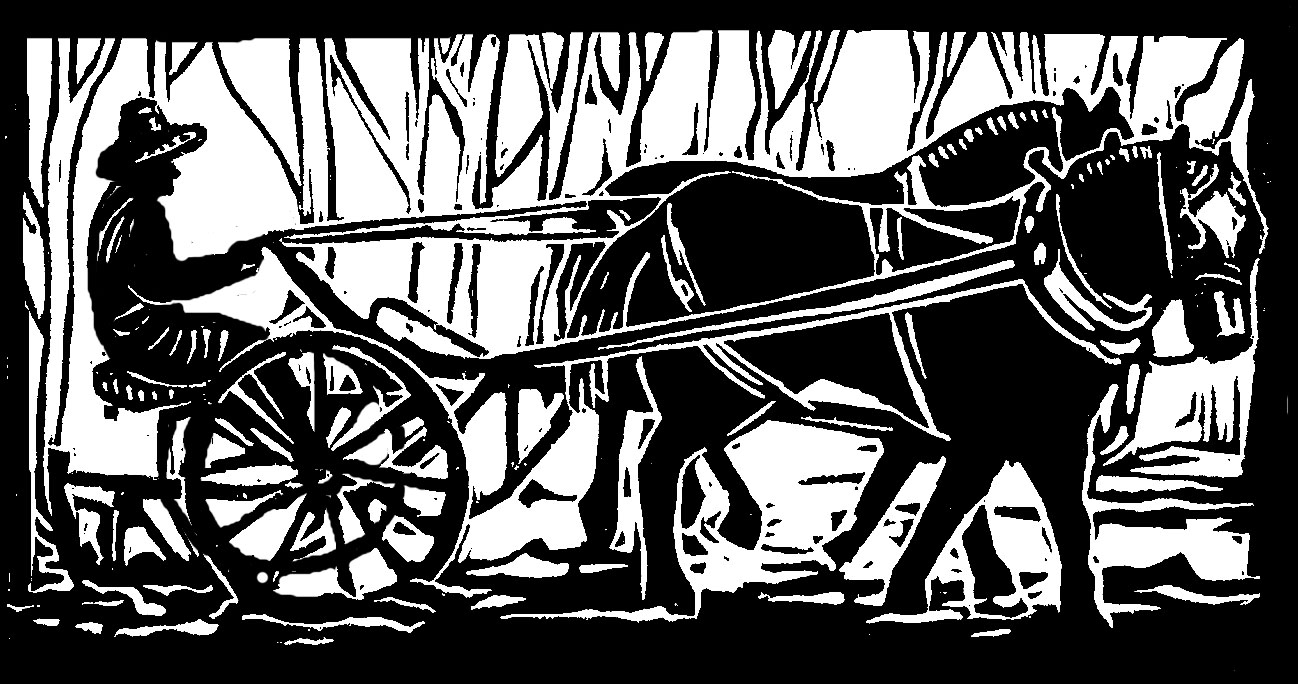
Clove of Garlic, Clove of Hope

Our farmer friends moved away some time ago, to a new farm in Maine. We hated to see them go, but wished them well in a new chapter of their lives. We were also wishing them well because they gave us some good farm stuff before they left. 

We were glad for a batch of nearly new wooden stakes, as our originally seven-foot stakes have deteriorated into 3 or 4 footers after many seasons of use. We were glad too for some second-hand landscape fabric, which we've been wanting to try for years. We've used all kinds of weeding methods – from straw mulch to hoes to cultivators to compostable plastics. But we still can't keep up.

Last spring, we laid the fabric out in one of our greenhouses, with the encouragement of our faithful volunteer, who has valiantly tackled many garden beds overrun by weeds. She is also a good worrier, and emailed us in the middle of the night: “I was doing some research and maybe it'll be too hot and what if it kills all your tomatoes!”

We laughed blithely, and transplanted the tomatoes and peppers. A few weeks later, when our farmer group came to our place, we proudly showed off our landscape fabric. “We've never used it before,” we said.

When they got done laughing, as in “Ba ha ha! You've never used it before?” we told them we did something else new: “We usually plant the slicing tomatoes 18 inches apart, but we tried a foot apart for the first time. What do you think?”

“How come?” someone asked, probably thinking we had made some great new discovery about tomato productivity.

“Because that's where the holes were in our new used fabric,” we answered, and then we had another round of laughter.

Happily the tomatoes and peppers did not die from overheating. In fact, they thrived. There was nary a weed in sight, except, of course, in the last quarter of one bed, because the fabric wasn't long enough. There the weeds were impressively large and the peppers were impressively spindly.  

We were stunned by the difference. Suddenly we had new hope: a possibility for two mid- to late-50s farmers to keep on farming. “Let's cover the whole farm in plastic!” enthused my fellow. 

“Yes,” I agreed, “Let's cover as many of the garden beds and pathways as we can in woven polymer! It's not perfect, but it's pretty good. It lasts for years, and it means we might be able to handle the work without collapsing!”

We went right out and bought ourselves a 15 foot wide roll of fabric, to get us started on next year's weed-free garden. We rolled it out along our dirt road, a project the farm pooch found pretty exciting. He roared down the 200 feet length of fabric and leapt over the rest of the roll at the far end, over and over again, until he was puffing hard. 

Meanwhile I set to marking the spacing. I crawled along with a yardstick and a piece of chalk, while my fellow followed with the propane-powered tool we'd borrowed from our other farmer friends, which makes the holes for the transplants.

Now this looks interesting, said the farm pooch. Well, maybe not that flaming tool, but this farmer crawling along sure is. 

Since I wouldn't let the pooch chew on my yardstick, he got nosy with my chalk. Luckily I had an extra piece, which I gave to him. Then he spent the next half hour throwing the chalk in the air, chasing and pouncing on it, which gave us more time to work. We ended up with holey chalk, and holey fabric.

The next day my fellow and I laid the fabric out in the garden, stapled it down, and planted a clove of garlic into each hole. A clove of garlic, and a clove of hope that we can manage to keep on farming.

Originally published in the Monadnock Shopper News, Nov 12 - Nov 18, 2025

Ask a Farmer to Write, or Is It Ask a Writer to Farm? 

I've been writing my farming column for nine years, and for the first time I have three columns due in one month, as I'm a substitute columnist for this week. Perhaps you are so fond of my regular column that you will be delighted to read the first bit of my yet-to-be-published middle grade novel (about a farm girl)!

Thistle was standing at the top of the world. It was the first day of summer and she was ten years old, and from the top of Apple Hill where she was whistling cheerfully she could see everything all at once: sky, farm, road.

In the sky swallows wheeled and darted and plummeted, catching their supper. In the farm lane, her brothers pushed the cows along to the barn for evening milking. On the road, just coming around the bend, someone was slowly riding a goldy-brown pony.

Thistle started and leaned forward, frowning now, watching. The someone was a stranger, but the pony was not. Thistle saw the pony give a funny half skip before it trotted, just like her pony did. She put her hands on her hips. The pony shook its forelock; there was a white star underneath. Why, it was her pony! Her pony Tug! and some strange boy riding him!

Thistle turned and pelted down the hill.

She was halfway to the road when she remembered that her mother had told her to be gone not one minute longer than it took the boys to bring the cows in; Thistle was supposed to help milk. The path she was following would take her right by the house and her mother, who would surely see her.

Thistle stopped and scrambled backwards and took the long way around instead, hoping her pony would buck the boy off and then stand innocently and happily nearby eating the grass on the side of the dirt road. That would serve the boy right for taking her pony. Besides, she'd never catch up to them otherwise.

Thistle jumped the creek and crashed through the alders to the cow lane, landing just in front of one of the cows. It was Red, with her nervous ears, her quick hooves, skittish and worried. Now she threw up her head violently, and twisted back around in the narrow lane. 

Thistle twisted too, out of Red's way and then by her, by and through the eight cows, who were all in a panic now. Some kept moving forward, some stopped, some turned around with Red, back the way they’d just come, while Thistle’s twin brothers waved and hollered, at the cows, at Thistle.

Thistle was still running, yelling, “Somebody’s got my pony!” back to her brothers, and her brothers yelled too. “He’s not yours! He’s not your pony! Thistle! Thistle! Get back here!”

Thistle rounded the corner, blocking out everything behind her, the sounds of the cows, her older brothers. Her heart was like a drum in her, enormous and loud, her ears bursting with it. Tug! Tug! Tug! Her pony!

Thistle ran through the pasture, her calloused dirty feet dodging the pats of cow manure, or almost dodging them. The manure was wet and new, but it didn’t matter, it didn’t matter – 

There was the one fence to cross, tight, shiny, new barbed wire, and Thistle flung herself on the ground and rolled underneath and then she was almost there, the road, the road – and then she burst out into the middle of it.

The road was empty. It was absolutely quiet. There was no one there, in either direction. No round brown pony streaking away with somebody strange riding him, no round brown pony chewing on the roadside grass, waiting for the somebody to get up warily from the ground and try to catch him again. 

Thistle was too late.

She stamped her foot. She blew her hair up off her forehead. Not even a bird squawked. There was no sound except for Thistle’s heart drumming. Thistle stood there in the road, furious, getting her breath back. Then she wheeled around and ran all the way back home. The cows had been in such a tangle in the lane she might beat them all back again, and not be late at all for milking. Her feet beat a rhythm as her heart cried out. Tug! Tug! Tug!

Originally published in the Monadnock Shopper News, Oct 22 - 28, 2025

The Lesson of Porcupine

The first porcupine we ever saw was in October of 2008, according to the nature logbook we keep here on the farm. We were taking an autumn walk in the hayfield, and we were astonished by the porcupine. Such a majestic bristly silvery self! It seemed less impressed by us, as it slowly wandered away. 

Years later, we found the second porcupine in the woodchuck trap in our garden. The closer we got, the bigger the porcupine looked, all puffed up in its black and white glory. We opened the trap, and this porcupine waddled away as fast as a porcupine can. Then we picked up the pretty little quills from under the trap and put them on our mantle.

The third porcupine we didn't actually see. We only saw its quills in the muzzle and fetlock of our overly curious draft horse Moon. For some reason that event didn't make it into the logbook, and we can't remember if we got the quills out, or had to call the vet. That time we did not put the pretty little quills on our mantle.

The fourth porcupine appeared this fall, when I was taking an evening walk with our farm pooch through the fields. My, I thought, that is a strange dark pile of horse manure. Then the pile moved and I realized it was a cute little porcupine, nearly all black, and wondering what I was doing in its field. 

Happily, the pooch did not spy the porcupine, and we took the long way around. The next evening we took a walk about the same time in about the same place. Apparently porcupines are creatures of habit, just as people and pooches are. There was my prickly little friend again. This time my dog was right nearby, and there was no stopping him.

The pooch bounced and barked in a gleeful ring around the porcupine, who was revolving in slow and ever more bristly circles to keep the dog at bay. Meanwhile, I was issuing every command this dog has ever learned in daily training sessions and eight (yes, eight!) training classes. I used my commands in a friendly fashion, a stern fashion, a desperate fashion. The pooch merrily bounced and barked.

It happened to be a Sunday evening, and my fellow was away, and the next day was a holiday, and I did not want a dog full of quills, no indeed. I was carrying a 15 foot dog lead, which has a small snap on the end, and I swung that snap in the dog's direction. The bonk distracted him for the seconds I needed to get hold of him. Then I marched him away.

The next day I avoided the hayfield altogether, and we did not see the little porcupine. Instead my pooch and I went for a nice walk down the shady lane, where we came upon an enormous porcupine. 

Bounce, bounce, bark, bark, said my pooch. 

Cut it out, right now, said the porcupine. 

Am I glad I have the lead attached to you today, said I, to the dog. I stepped on the end of the lead, the dog stopped, and the porcupine skedaddled away over the stone wall.

But soon enough, on another walk, another evening – a Sunday evening, when we have company –  my pooch decides to go up the hill by himself, which is unusual. Hmm, I think, I wonder what that's about. 

Bark, bark, bark! I hear. I sigh, and trudge up the hill. The barking stops. Good, I think, the porcupine went under the busted hayloader, and the dog is trying to get under the hayloader too. 

Alas, the porcupine is slowly walking away, and my pooch is on the ground, rubbing his muzzle with his paws. Oh, he is a very sad pooch, with a mouthful of quills. Oh, we hope he has learned the Lesson of Porcupine.
 

Originally published in the Monadnock Shopper News, Oct 15 - Oct 21, 2025

You Never Know When Something Might Break Down

We have five sections of hay to cut each summer. The first four went splendidly with our new horses. When we got to the fifth section, our daughter, who was kindly helping us, yet again, said, “It's a lot nicer to hay when it cools off in the evening. Let's start at five instead of noon.”

I agreed with the first statement, but couldn't agree to the second. “You never know if something's going to break down, and the forecast might change. It could rain tomorrow.” It had not rained in weeks, but the laws of haying are firm: if it's not raining, you must hay.

My daughter groaned. My fellow and the horses groaned, as they went from the shade of the barn to the blazingly sunny field.

We figured there were four loads, so we would finish around five, in time to make supper. We got two loads in before the first hayloader broke. My fellow and our daughter spent an hour and a half trying to replace links in the chain. No luck.

“We could run it until the chain on the other side breaks,” I suggested. I was unloading the haywagon. The load of hay seemed a lot bigger when I was working by myself.

“But then we'd have two broken chains,” said my fellow, “and still might not get the hay off today.”

“Why don't we just use the other hayloader? Don't we have two for exactly this reason?”

“Yes,” answered my fellow, “but it's going to take a while to grease it up.”

“Well, I've still got a lot to unload here,” I said grumpily.

Finally we took the second hayloader up to the field. We went 100 feet before we heard the banging. One of the thing-a-ma-jigs that shuffle the hay up was broken.

My fellow balanced precariously on the back edge of the haywagon, while my daughter handed him twine. I stood in front of the horses to keep them from moving ahead in case my fellow fell off. He did not fall off. We went another 100 feet. More banging. The twine had broken.

We repeat the precarious procedure with wire. A hundred more feet. The wire breaks, or maybe this time it is more pieces of the thing-a-ma-jing.

“Looks like we're picking the rest of this hay up by hand,” says my fellow.

“We don't have enough daylight,” I moan.

“I'm calling everyone we know,” says our daughter, which translates into the handful of people who might help us in the heat. One is at work, three are in Maine, and the fifth is at work and has evening plans with his spouse. But he comes anyway.

“Are we glad to see you!” we say.

The evening comes on quickly. We have to make smaller loads, working by hand, and that takes even more time. Dusk brings out the giant flies, buzzing, landing, and biting, which means horses bucking, kicking, and wanting to run.

My fellow stands in front of the team, talking firmly and calmly, using a long whip to chase off the flies. But it is a little dicey, and maybe it's good that our friend might not fully realize that, as repeatedly he hops up on the load to stomp the hay down.

My daughter and I pitch hay for all we're worth. The dog, who's had it with being tied around my waist and having to go with me for every forkful of hay, is excited by the bucking and kicking. He wants to stand in front of the horses and bark. Instead he gets tied to a tree and barks.

Then it is dark. We can't see the hay anymore. We might have it all.

“Good enough,” I say wearily, and we all go back down the hill. “I wish we had a nice supper to offer you,” we say to our friend. “How about some cold water?”

“That sounds good,” he says.

Last load of hay in the barn and no one hurt. That sounds good too.


Originally published in the Monadnock Shopper News, Sept 17 - Sept 20, 2025