"What Farm?"

In July we farmers give up. 

We are inundated, with two greenhouses and five garden sections in full swing. Everything is flourishing, garden plants, garden weeds, garden pathways. 

Sometimes it seems like the tasks of all the seasons bulge themselves into this time of year.  We are preparing ground and planting, as in spring, but now for fall crops.  We are weeding, irrigating, and mowing, summer work.  We are harvesting, beginning to put food by, and putting in cover crops, as in autumn. 

We are not resting, however, as in winter!  The biodynamic farming fire held in the earth in wintertime is now thundering all around us, the energies of growth and life and change vibrating in the plants and rising up into the atmosphere  (Oh, the banging, crashing thunderstorms!)

Funny thing is, even with all this inundating, flourishing, bulging, and thundering, we feel more relaxed than in other seasons.  We don’t precisely give up; it’s more like we give over: give over to the fact that we can’t get everything done, no matter how long and hard and fast we work.

Now we are not worrying about all the other things we have to do; we are just in the pressing task of the moment. 

“What garden?” we say, in the house, when we’re deciding whether to start with the dirty dishes on the counter or the dirty dishes on the floor.  (It’s good to have a little variety in one’s dish-washing life.)

“What house?” we say in the garden, as we weed the carrots, the beets, the summer squash, the winter squash, four plantings of lettuce, the broccoli, the cabbage, the potatoes, the beans. . .

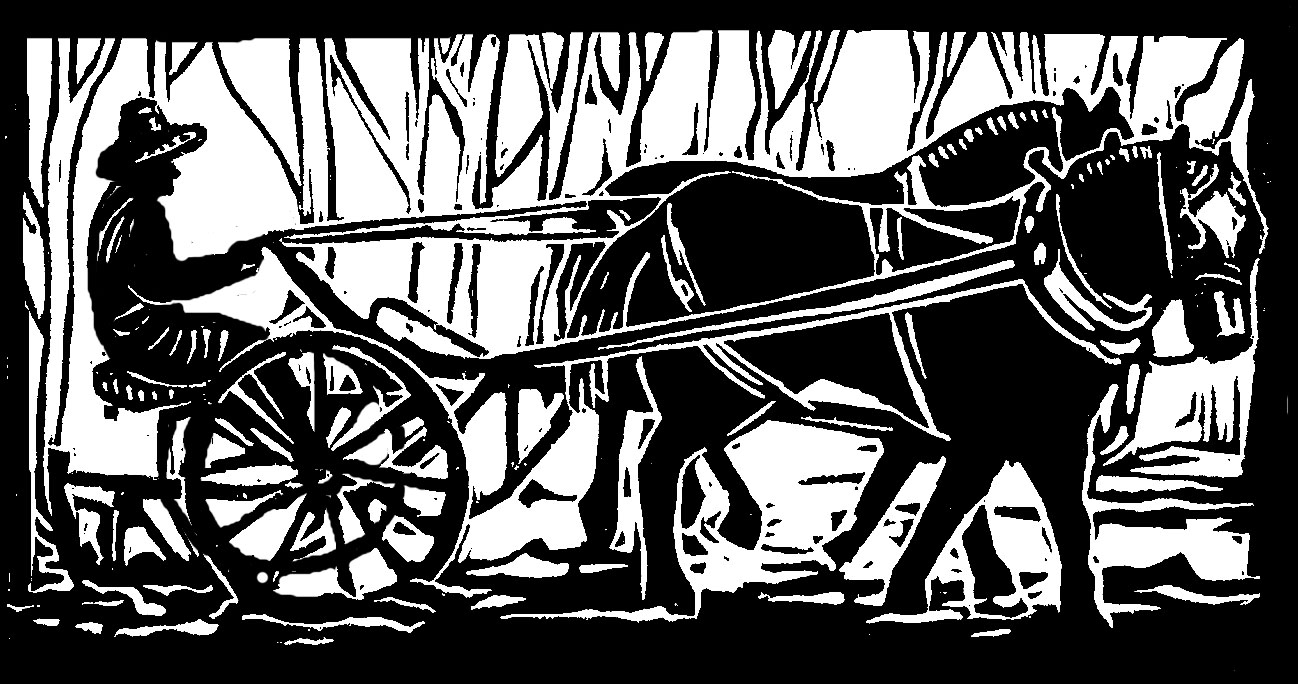
“What greenhouse?” we say, as we put up loose hay with and for our draft horses, bringing in the last load of the day at 9:30 at night.

“What hayfields?” we say in the greenhouse, as we prune and pick tomatoes, and string up sweet and hot and green peppers, and harvest basil and eggplant.

“What barn?” we say, as we set the have-a-heart traps, and trim and trim and trim under the electric fence, so that it won’t ground out and foil all our plans against marauding woodchuck and deer.

“What fence?” we say, in the barn, as we muck out the impressive amount of manure four 1200-pound horses can produce in a single day, as they enjoy their shady, cool, fly-free stalls.

And then there are the individual farmer tasks: “What hooves?” says the farmer who is tapping on her keyboard.  “What farming and sustainability column?” says the other farmer, who is trimming all sixteen of those 1200-pound horses’ hooves, which also grow more luxuriantly in spring and summer.

The final questions, of course, in July, are these two: “What swimming hole?” we say, as we are farming and farming. 

And, at last, since we are feeling so relaxed and in the sustainable farming moment: “What farm?” we ask, as we eat ripe juicy tomatoes, and delicious basil, and (locally made, of course) fresh mozzarella cheese at our 8:30 p.m. supper picnic at the swimming hole. 

Then we say it again, just for the pure summer fun of it: “What farm?”

Originally published in the Monadnock Shopper News, Jul 10 – Jul 16, 2013

Outer Space Veggies

June is a welcome month – oh summer! and also a welcoming month, on a CSA farm. 

In June, we farmers welcome back returning CSA members, and we also introduce new members to the garden, the fields, the workhorses, the greenhouses.  We slip in a little warning about our scratchy bitey kitty, on our way to the last stop on the farm tour: the distribution shed.

The shed is where it all comes together, from soil to compost to seed to food: the fresh from the spring garden vegetables are ready!  Returning members, and many new ones, look eagerly for favorite spring treats, knowing that the season is relatively short for many of the crisp, crunchy spring offerings. 

There are always a few new folks, however, who are a little more hesitant.

First up in the shed are the fresh herbs: basil, oregano, thyme, lemon balm, garlic greens. 

“Wow, they smell great,” says the new member.  “but I don’t really know how to use fresh herbs.”

“Just like dried herbs,” we answer.  “Just use three times as much in your recipe as dried.  You’ll be amazed at what a difference fresh herbs make.”

“Well . . . I’ll take a little.”  The member takes a smidgen of each kind of herb.  Then she/he thinks better of it, and puts half of each smidgen back in the basket.     

“There’s plenty more,” we encourage.

“Oh, that’s all right.  Whoa! what’s that thing?  It looks like a space ship! Are you supposed to eat it?” 

“Oh, yes,” we answer, holding up a purple spiky fist-sized vegetable.  “This is kohlrabi!  It’s in the broccoli family.  You can eat it raw with dip or in a salad, or you can cook it.  But first you have to peel off the purple skin.  You eat the pale green part inside.”

“Okayyyy . . .”  the member places two kohlrabi gingerly in his/her bag.   “Now what’s this?  A radish?”

“That’s a spring turnip.”

The member wrinkles her/his nose.  “I don’t like turnips.  My grandmother always tried to get me to eat turnips.  I do not like turnips.”

“This is not you r grandparents’ turnip!” we reassure.  “This is a spring turnip, mild, crisp, tasty.  You don’t even have to peel it; and you can eat it raw or cooked.   You could even eat it out of hand, like an apple.” 

One farmer gleefully eats a turnip, to demonstrate the spring turnip’s non-poisonous, non-icky, decidedly delicious nature.  The other farmer points and nods encouragingly at the happy turnip-eating farmer.

“Okayyyy . . .”  The bunch of turnips goes slowly into the bag, next to the space craft.  “Now what’s this?”

“That’s pac choi, or bok choy, it’s also called.  You might know it from Asian food?  You can stir-fry it, or you can slice it up for your salad.  It’s crisp, and tender, both.”

“Okayyy . . . I guess I could try it.”  The member peers in his/her bag, as if the addition of yet another strange item might cause a sudden blast-off of the space ship kohlrabi.   Then she/he turns to the next tray.  “What about this?  Is this some kind of lettuce? Or what?”

“Very close.  It’s great in a salad: a mix of salad greens, mustard greens, arugula, tatsoi, tiny kale.  It adds a little spice to your salad.  Here, try a leaf!”

The member takes a tiny bite of a tiny leaf.  “Whoaa,” he/she says,  “That’s really spicy, really spicy.”

“Good, isn’t it?  It mixes in beautifully with the lettuce.”

The new member’s eyes light up, with excitement or relief, we’re not sure which, when she/he sees the next tray of produce: heads of lettuce. 

Lettuce.  Now that is a proper vegetable.

And right next to the lettuce is spinach.  The member is positively beaming.  Lettuce!  And spinach! 

“This looks really good,” he/she says.  “All this lettuce and spinach.  And I can just chop up all this other stuff and stick it in my salad?”

“Yes!  But don’t forget to peel the kohlrabi.”

“The kohlrabi . . . which one is that again?”

“The purple space ship.”  The space ship that will take to you to new heights of local sustainable gastronomic delight! we want to add. 

But we don’t want to scare our nice new member too much.

Originally published in the Monadnock Shopper News, Jun 12– Jun 18, 2013

The Perfect Time . . .

In May, my fellow and I begin to feel like the middle-aged farmers who live in a shoe, and have so many projects we don’t know what to do.  We wave encouragingly to each other as we race from one task to the next.

Well, one farmer races.

That one farmer is direct sowing a second planting of beets and carrots; the other farmer, me, is happily weeding.  I’ve got my favorite hoe, called a collinear hoe.  It is light and long handled, with a narrow blade meant to skim under the surface of the soil, both breaking up any crust and disturbing any just geminated weeds.

I whistle; I love weeding, especially this May weeding, light, easy, and fast.

“But I don’t even see any weeds yet,” says my fast-forward farming fellow as he dashes by with the seeder.  He seems a little doubtful about my choice of contemplative farming work this morning.

“I know,” I am pleased.  “It’s the perfect time to weed!” 

“It would be the perfect time to get the rest of the irrigation laid out, too, before everything gets too dry!”  He speeds past with a roll of irrigation drip-tape, and a handful of headers.

“Yes!” I call after his retreating form, and go back to my weeding.

“It would be the perfect time to transplant this broccoli,” he says next, running by with a flat of plants, a measuring stick, and a trowel.  “Before they get tired of being in the flats.”

“Yes!”  I call after him.  I smile beatifically at my hoe and my beautifully weeded spinach and kohlrabi, and weed some more.   Soon enough, my fellow reappears.

“It would be the perfect time to cover the next planting of salad greens!”  Now he’s dragging a big bag of row cover, trotting along, slowing down a notch.  “Before they germinate, and the bugs find them.”

I smile and wave.  I’m making great progress.  I love weeding.  I love May.  I love farming.

On his next pass, my fellow is walking.  He’s not carrying a thing.  And he actually comes to a stop.  “It would be the perfect time to finish building the new greenhouse, before the tomatoes are desperate to get into the beds,” he says.

“Yes!” I say.

There is a pause.  He is actually standing still, watching me for a moment. “How’s it coming here?  You think you’ re almost done?”

“Oh, pretty soon.” 

“Aren’t you hungry yet?” he says plaintively.  “It’s almost one o’clock.”

“You mean ‘It would be the perfect time to make lunch? before the farmers are desperate with hunger?”

My fellow gives me a friendly little poke.  “Oh, you’re really funny.  Let’s go make lunch.”

I have to admit I like this invitation better than some of the other offers that have come my way this morning.  I’d be willing to stop weeding for some nice lunch.

“Don’t you love May?” I ask, on the way to the house.  “We get to do a little bit of everything.  A little planting, a little weeding, a little horse work, a little office work, a little greenhouse work, a little . . .”

My fellow looks askance at me.  “Yeah,” he says, “you do the little bit of weeding, and I do the little bit of everything else.”

Now I give him a friendly little poke.  “I love weeding,” I say.  “Plus there’s so much possibility in May of getting everything done.”  In May, we still labor under the illusion that we will accomplish everything, and that we will accomplish it wonderfully well, better than ever before.  Now that’s a sustaining belief for a sustainable farmer.

“There’s no big disasters yet, either in May,” I add.

My fellow nods.  “No, not yet.  And today would be a perfect day to get up that new deer fencing, before the big deer disaster happens.”

“Yes!”  I say.  “I’m almost done weeding . . . ”

Originally published in the Monadnock Shopper News, May 15 – May 21, 2013