• Home
  • About the Farm
  • How We Farm
  • Directions
  • What is CSA?
  • CSA & Farmers Market
  • Membership
  • FAQ
  • In Our Garden
  • Recipes
  • Veggie Lovers Say
  • About the Farmers
  • Farm Talk: Kim's Column
  • Kim's Writing
  • Farm in the News
  • Contact
Menu

Hillside Springs Farm

32 Comerford Rd
Westmoreland, NH, 03467
(603) 399-7288
HILLSIDE SPRINGS FARM

Your Custom Text Here

Hillside Springs Farm

  • Home
  • Farm
    • About the Farm
    • How We Farm
    • Directions
  • CSA
    • What is CSA?
    • CSA & Farmers Market
    • Membership
    • FAQ
  • Veggies
    • In Our Garden
    • Recipes
    • Veggie Lovers Say
  • Stories
    • About the Farmers
    • Farm Talk: Kim's Column
    • Kim's Writing
    • Farm in the News
  • Contact

Summer Farm Visitors

July 16, 2014 Kim Peavey

On our New Hampshire vegetable farm, we have lots of summer company:  CSA members, woodchucks, relatives, bugs, deer, friends.  Of course, we greet some of our visitors with more enthusiasm than others.  But it’s always interesting to see what farm life brings out in a personality. 

The Easy-Going Admirer:  “Look at those beautiful flowers!  Wow, those tomatoes are huge!  And the Swiss chard!  The cabbage!  The horses!  The trees!  the sky!  I love it here!  It is gorgeous!  It is fantastic!” 

These fine and relaxed visitors remind us how lucky we are, and how beautiful it is here, just at the time when we farmers most need it, when the work is full-on, and we can’t see the forest for the trees, or rather, the rest of the world for the garden.  These visitors have a magical, delightful ability not to see things, too: the weeds, the chomped-on-by-woodchucks broccoli, the fall transplants begging to go into the ground.

The Guilty Admirer:  “Gosh, it’s fantastic!  Wonderful!  The carrots!  The basil!  The peppers!  And wow, what a lot of work!  Gosh, I feel like I should lend a hand!  What should I do?  Oh, I don’t know where to start!” this visitor might say, as he or she trails along the garden pathways, admiration and worry in such keen balance that a certain paralysis sets in. 

In one of our funniest-after-the fact-visits, when we were desperately haying before a rainstorm, the farmers frantically pitching hay and the draft horses hurriedly hauling hay, our visitors admired us from the edge of the field.  They kept far enough away to avoid the flying sweat, the biting bugs, and the flying and biting curses of any hard-pressed haying operation.  The Easy-Going Admirer was content and appreciative; the Guilty Admirer whimpered,  “Oh, it’s so beautiful!  So idyllic!  Oh, I should help!  Oh, it looks so hard!  Look at those dark clouds coming so quickly!  Oh, wow, do I have to help?”

The Cheerful Pitcher-Inner:  These visitors are gleeful when they see a hayloader and dark clouds coming.  They grab pitchforks, jump up on the haywagon.  After the haying, they rub their hands eagerly together when they see the weedy garden.  “Okay, show me what to weed,” they say.  “Let’s just finish weeding this entire quarter-acre garden section; we can go to the lake later, when we’re good and hot and ready for a swim.  All right, everybody, let’s get at it!”

Ah, now this is a visitor after our own farming hearts!

The Reluctant Pitcher-Inner:  “Do we havvvvveee to?” is the distinctive call of these fine people.  Often the children of a friend, relative, or even a resident farmer, these folks seem more attracted by the lake and the ice cream shop than the weeds in the garden.  And yet somehow they find themselves weeding, weeding, weeding, following in the roundabout, annoying path of Cheerful Pitcher-Inner adults who can’t seem to see the clear and direct route to the cool water and the even cooler ice cream.

The Panicking Pitcher-Inner:  Closely related to the Guilty Admirer, but given to nervous fits of unfocused activity, overwhelmed by the sheer amount of work to be done.  One farmer might send this visitor to help pick the zucchini and yellow squash with the other farmer at the far end of the field, for example.

“Oh, oh, here’s some ripe peppers!  Shall I pick them?” the visitor calls.  “No, no, keep going,” the farmers encourage.  “Oh, oh, here’s some lettuce that needs weeding!  I should weed it!”  “No, no, keep going, it’s all right!”  “Oh, oh, oh, I see tomatoes ready!  Shall I just get them first?  Oh, oh, oh, these beans are so ripe, oh, oh, oh.  . .”

By this time, and after all these oh-oh-ohs, both farmers are weak with laughter.  ”Keep going, keep going,” we say, “You’re almost to the squash!  It really needs picking!  You’re almost there!”

We farmers are almost there too, and we’re there, and we’re everyplace in between.  Full-time farming is a committed relationship, and we go through the whole range of emotions that characterize such a rich, full relationship: love, anger, despair, frustration, fear, grief, boredom, ecstasy, rage, affection, excitement, satisfaction, a sense of the sacred, a sense of the ridiculous.  We cycle and recycle through it all, from easy-going to guilty, from cheerful to reluctant to panicking, and we sure are glad to have our summer company, to help us admire and work and sympathize and laugh our way through.

Originally published in the Monadnock Shopper News, Jul 9 – Jul 15, 2014

Tags Summer, Harvest, Loose Hay

Draft Horse Dream

June 18, 2014 Kim Peavey
IMG_0009[1].JPG

June on our vegetable farm is when this farmer fantasizes.  About what, you may wonder?  Resting on a beach, swimming in the ocean, summering in France, taking a nap?  No, it is none of these.

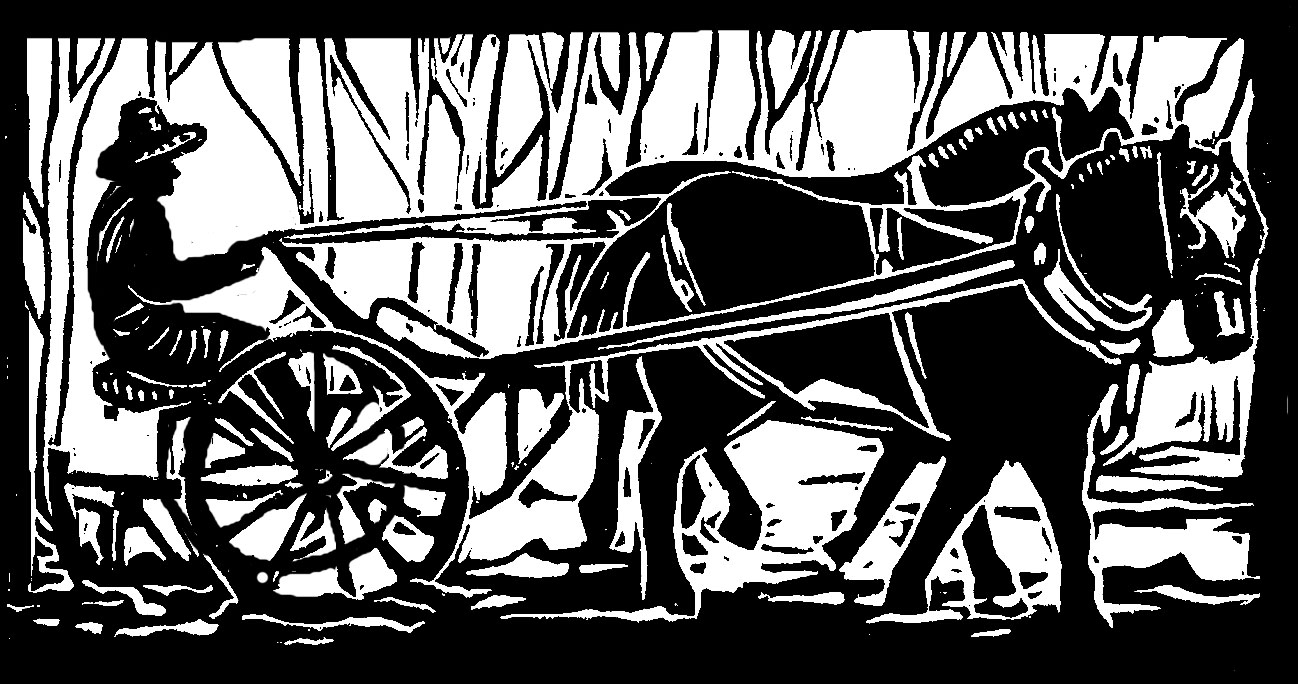
In June I fantasize about being a draft horse.  What an exquisite thing to be!  First of all our draft horses are gorgeous, strong and sleek and elegant.  Everyone admires them.  All the nice people who come to the farm in June to start picking up their CSA shares say hello to the red-faced, sweaty farmers, but what the people really want is to linger with the draft horses.  Everyone wants to pet the horses, feed them, say sweet words to them.

Of course the size and the beauty and the good nature of the horses can’t help but attract such kind attention, but there’s more.  People are awed, intrigued, fascinated, by the very manure a draft horse produces. 

Yes, the red-faced sweaty farmers certainly prize the poop, shoveling it up and making big shrines of it, covering it with a heavy cloth to protect it, checking it periodically and oohhing and ahhing over its transformation into rich black compost.

Then there are children of a certain age, and of a certain relaxed, liberal parentage, who revel in horse manure as well.  Those adventurous, happy children take enormous pleasure in removing socks and shoes and then walking barefoot repeatedly through the freshest, squishiest pile of horse manure available.  It’s hard to resist, and enormously satisfying, particularly when one watches the faces of any nearby adult.

In June, the horse manure is especially nice and squishy, since another draft horse delight this time of year is green grass.  The horses are out on pasture, and that makes for happy horses.  They buck, they kick, they run, they snort.  They’ve got lots of room, and they’ve got lots to eat.  They can doze in the shady woods, and then eat.  They can gallop around and then eat.  They can rest from galloping and eating, and then eat.  Oh, what a life!

In the pasture there’s no halter, no lead ropes, no harness!  And yet in June the horses are in fine shape, muscled from the spring plowing and compost-spreading, discing and harrowing.  They are in fine shape, feeling good, feeling fit, but there is a lovely lull now in draft horse duties, before haying season and fall preparation of the garden come on strong.  A horse can feel wild and free, on the plains or the steppes, living out an unfettered wild horse life!

Then of course, there are the times in June when a draft horse welcomes a halter, demands a halter, or at least demands a person come open the gate and give access to the cool, fly-free, dark stable.  June can be hot and buggy, and at five or six in the morning the horses come galloping to the gate.  Let us in! 

And what do we obedient farmers do?  We let them in.  We scratch their itchy chins and bellies.  We feed them tasty scraps from our harvesting: outside leaves of lettuce, already blooming pac choi, wilted greens, carrot tops, just in case the horses work up a hunger loafing in the stable.

We also admire their calm and beauty and good nature as we race around sweaty and red-faced all day, saying hello, how are you back to our nice CSA members, and weeding and planting and planning and harvesting and keeping the accounts and making lists and feeding ourselves and washing the dishes and fixing the fence and and and  . . . 

Oh to be a draft horse!  In June!

Originally published in the Monadnock Shopper News, Jun 11 – Jun 17, 2014

Tags Summer, Draft Horses

Slow Farming

May 21, 2014 Kim Peavey

You might call us slow farmers here on our draft horse powered vegetable farm. 

Of course, farming by its nature is a slow process, and we help slow it down even more with our teams of horses and our hoes and shovels and our heirloom vegetables.  We like the “Slow Food” and the “Slow Money” movements, and we also like slow farming.  We like it that farming takes its own good time.

Even our fastest seeds -- cutting greens and pac choi -- take two days to germinate, and our slowest -- carrots in the cold spring soil -- might take three weeks to sprout.  Red peppers are pokey too, despite being coddled in our propane heated greenhouse, with an electric heat mat running twenty four hours a day under each flat.  They can also take up to three weeks to show their green.

Then there is the harvest wait.  Our fastest harvestable item is those same cutting greens, and they take a month to get ready.  The red papers are slow here as well, taking three months to ripen.  But the onions grow for five months, followed by a curing period, and the potatoes win the slow prize, as they are in the ground from May first to October first.

There’s not much happening quickly in the farm kitchen either.  First we thaw the marinara sauce (from tomatoes that we that we grew, harvested, cooked, and froze last summer) for three days in the fridge.  Then we dump the sauce into a pot, along with the beans we grew, picked, shelled, dried, and then undried by soaking overnight, followed by an hour or more of cooking before they are ready to join the sauce. 

Next we venture to the root cellar for carrots, realizing on the way that in fact we need to sort through all the carrots, which precipitates a three hour project kneeling on the kitchen floor with mesh bags, carrots in all conditions, and the dirt that attends them. 

First we snap off any sprouts from the tops of the carrots, and compost any carrots that need it.  Then we divide the rest into good-for-people carrots and good-for-horses carrots.  We bag the carrots back up, return them to the root cellar, sweep up all the dirt on the floor, and only then remember what it was we wanted in the first place: two carrots for supper.

Happily, we began this supper project three days ago, and it was only lunchtime when we started with the carrots.  Now we head back down to the root cellar, open the bag, extract the two carrots, wash them, chop them, and throw them in the pot.  The herbs are next, herbs we grew, cut, dried, and jarred, and now we take a pinch, strip the tiny thyme leaves and bigger oregano leaves off the stems, and grind the herbs in a mortar and pestle with salt. 

Then, as it approaches the true supper hour, we add some pasta (now that’s fast food -- in a package straight from the store!) and voila!  Minestrone soup!  Our slow food supper!

But we have to admit there is a moment on our farm around this time of year when we experience instant gratification.  (Well, instant in the sense of a matter of hours, rather than days or months).  That is the moment when our transplants, flourishing in the greenhouse for six to eight weeks, then hardened off outside for a week, are ready to go into the ground. 

We (and our horses) have spent some time, of course, preparing that ground: plowing in the cover crop, loading the spreader with compost with our two shovels and our four hands while the horses wait patiently for the next load to be ready to spread, discing in the compost, then harrowing, and finally making the garden beds.  Two people, two horses, five pieces of equipment, and many hours.

But at last we are at the moment: ground ready, transplants ready.  We go!  We plant 320 cabbages, 320 kohlrabi, 250 scallion plugs, 200 lettuce, 200 pac choi, 30 endive, 30 escarole. 

And there it is: Instagarden!

We go from bare ground to 280 foot rows of gently meandering, sweetly growing beds of beautiful green plants.  We have a garden!  It is so sudden (sort of), so tangible, so satisfying!

Now there is no turning back!  We are truly vegetable farmers once again, now that we have plants in the ground.  And from now on, as the slow food crops creep along from leaf to flower to fruit (and seed), and the weeds gallop through the same process, we slow farmers are transformed: we are nimble, we are agile, we are deft! 

We too gallop, from one patch of weeds to the next!  We are swift, we are speedy, yes, we are fast (slow) farmers!  Look at us go!

Originally published in the Monadnock Shopper News, May 14 – May 20, 2014

Tags Spring, Planting

A'Tremble on the Farm in April

April 23, 2014 Kim Peavey

In April we New Hampshire farmers are all a’tremble.  Actually, everything on the farm in April is all a’tremble, with eagerness, especially after a winter as long as this last one has been.

There is the garden soil, trembling and ready.  In the soil we’ve planted the cold tolerant crops, peas and beets and carrots and salad greens, the seeds trembling and ready to sprout. 

There are the transplants too, vibrantly green and ready, cabbage and broccoli and scallions, kohlrabi and lettuce and onions, nurtured for six weeks in the greenhouse.  In April we harden off the little green babies, putting them out in their basinets for a nap in the afternoon sunshine, progressing to an entire day cavorting in the fresh outside air, and finally trusting them out for the night, albeit tucked into a mini-greenhouse, a knee-high version of our larger hoop house.

We harden the transplants off for a week, in the hope that they are sturdy and hearty enough to stay at the trembling and ready stage when we finally plant them out in the April garden.  In April, there is still a fine line between shiver and shrivel, and trembling and ready.  We cross our fingers and look all around us for the signs of April hope.

Yes, the trees are a’trembling too, with that exquisite faint green of new leaves uncurling.  And the grass, that green trembling haze.  And then of course there are the draft horses, trembling at the gate, longing to make the earth tremble as they gallop to the green grass. 

Sadly, that grass is a month or more shy of being ready for grazing.

We commiserate with our nice horses, tucking tired old wrinkled old dried up carrots from last fall’s harvest into the horses’ hay as a treat.

We too are still eating those tired carrots, and some sprouting potatoes, as we’ve already eaten all the rutabagas and turnips and beets from the root cellar.  We’ve also already eaten all the yummiest things from the freezer: broccoli and beans and greens, pesto and salsa and red peppers.

Now we have to invoke the mighty kitchen ingenuity spirits, to help with what’s left: the eggplant, the baked-and-frozen-before-it-goes-bad winter squash, the jars and jars of marinara sauce.  All delicious in their own right, of course, but we are challenged by eggplant, squash, and tomato: how to make yet one more inspiring (or at least edible) vegetarian meal?

Happily, our canned fruit and jams are still going strong, and our pickles and cider.  Not quite a meal, but at least it peps up the rest, just as we hope the carrots pep up our horses’ hay meals.

Because, we have to admit, we farmers do have the pleasure of a little April grazing.  Not in the garden or fields, but in the greenhouse, which has doors flung open and sides rolled up and fans running, lest, even in April, the temperature soar above the ideal seventy to eighty degree range.

There in the greenhouse, my farming fellow and I stand a’trembling, before the altar of lettuce, lettuce that is bursting out of its one-inch space, lettuce which needs to be “singled,” as we say.  In each little space there may be two or even three lettuce plants, two inches high, because we’ve sowed seed enough to ensure good germination.  Now we want just one lettuce in each spot, so it will grow straight and broad and strong.

We are at that wonderful April moment: clipping out the extra lettuce!  Clipping out every tiny, sweet, tender extra bouquet of leaves, and popping every one into our mouths.  Yum. Yum. Yum.

It’s been a long winter.  It’s been a long time since fresh greens, of any kind.  It’s been a long wait.  And it’s worth it.  Oh, we tremble, with that wonderful eagerness of spring, and the lovely exultation of lettuce, all at once!

Originally published in the Monadnock Shopper News, Apr 16 – Apr 22, 2014

Tags Spring, Greenhouse
← Newer Posts Older Posts →

Farm Talk

kim holding veggie flat.jpg

Kim Peavey

Farm Talk, by Kim Peavey, is a monthly farming and sustainability column, originally published in Keene NH's Monadnock Shopper News, as part of the "Green Monadnock" series. 

Kim farms and writes from southwestern New Hampshire.  She and her family, as well as two teams of draft horses, grow vegetables biodynamically for 60 local families through a CSA garden. Hillside Springs Farm also sells produce at the Keene Farmers’ Market.

Kim has published essays and poetry in the Small Farmer’s Journal; The Natural Farmer; Local Banquet; Image: Art, Faith, Mystery; Friends Journal; Renewal; Mothering Magazine; Lilipoh (on-line version), and elsewhere.  See Kim's Writing for more.


You must select a collection to display.
veggie basket.jpg
Footer-Spacer.jpg
Hillside-Springs-Contact-Footer.jpg
Footer-Spacer2.jpg
HSSBoots.jpg