• Home
  • About the Farm
  • How We Farm
  • Directions
  • What is CSA?
  • CSA & Farmers Market
  • Membership
  • FAQ
  • In Our Garden
  • Recipes
  • Veggie Lovers Say
  • About the Farmers
  • Farm Talk: Kim's Column
  • Kim's Writing
  • Farm in the News
  • Contact
Menu

Hillside Springs Farm

32 Comerford Rd
Westmoreland, NH, 03467
(603) 399-7288
HILLSIDE SPRINGS FARM

Your Custom Text Here

Hillside Springs Farm

  • Home
  • Farm
    • About the Farm
    • How We Farm
    • Directions
  • CSA
    • What is CSA?
    • CSA & Farmers Market
    • Membership
    • FAQ
  • Veggies
    • In Our Garden
    • Recipes
    • Veggie Lovers Say
  • Stories
    • About the Farmers
    • Farm Talk: Kim's Column
    • Kim's Writing
    • Farm in the News
  • Contact

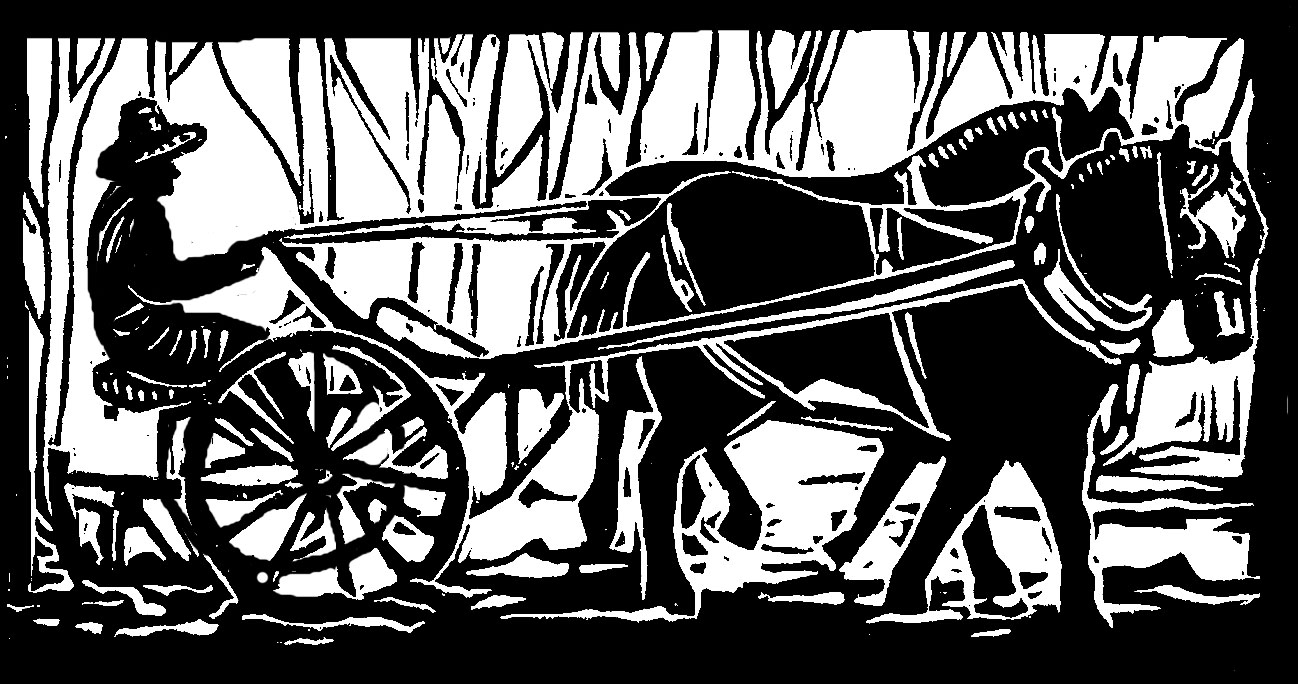
Read This Before You Buy That Team of Horses of Plow Up Your Garden

October 8, 2014 Kim Peavey

We recently hosted a draft horse workshop on our vegetable farm.  Seven good people, hailing from Vermont, New Hampshire, and New York, came to us on a Sunday afternoon to learn about vegetable production with draft power. 

We enjoyed talking to these budding horse farmers, who ranged from a couple who already has a garden, a team of horses, and full time jobs as teachers and/or guidance counselors (a perfect set-up for a successful vegetable farm-- two outside sources of income!) to a Dutch fellow that had come along as company with a friend.  “I'm not a farmer,” he said, and the friend answered “Yet,” smiling at him. 

The workshop went well, with a practical demonstration of readying a field for garlic and fall cover crops, as well as a chance to drive Molly and Ben, two of our horses.  We also had lots of conversation about the various implements we have and use here, and the various implements we have and don't use here (generally wrested rusty and busted up from an old hedgerow and donated by kind, well-meaning folks), and the various implements we don't have and would like to use here (all eloquently described by my farmer fellow, who generally has some wonderful horse drawn implement in mind that cost only $2000! and would greatly benefit the farm, if not the farm budget).

We ended the workshop with good-byes and good lucks,  and with a reminder to check the recent article on the NOFA-NH (who sponsored the event, along with the National Center for Appropriate Technology) website for more of our words of horse-farming wisdom. 

Now these words of wisdom come to all of you budding vegetable- and horse- farmers, so that you can contemplate your next glamorous career change, and so that you don't feel too sad about missing our nice workshop.

Three Basic Tips (with notes) for Starting in with Draft Animal Power on the Farm

Love your draft animals.

            1.  Think marriage, not summer romance.  Working with draft animals is a relationship, and if you want to be in it for the long haul, you're going to be ecstatic, enraged, bored, happy, frustrated, sad, content, joyful, ready to quit, ready to keep on, and everything in between.  A good teamster thinks of the animals first, even when everything else on the farm might be going wrong.

            2.  Consider temperaments, both your own and your draft animals.  Do you enjoy the slow, steady pace of oxen, or the peppier step of a team of horses?  Or do you have no idea?  Find out.  First.  Before you buy any.   Once you buy, you're going to be housing, feeding, and tending your hungry big critters, and all that housing, feeding and tending has to happen whether you ever get your garden plowed or not.

Find good mentors.

            1.  Find a friendly, experienced draft horse or oxen farmer (or two or three), preferably living next door, and with ample time and abundant energy to spend with a teamster-wanna-be.  In lieu of that, you may have to travel a little.  Expect to pay for the privilege of  learning from all that experience and friendliness, either through formal workshops costing money or through less formal barters of your time and labor and your unfailing good will and respect for a busy farmer's help.

            2.  Find a friendly, experienced pair of horses or oxen for a first team.  They will teach you as much as your farmer-mentor.  That beautiful matched team of snorting high headed high steppers may be fantastic for a long-time teamster, but not for a beginner.   And that adorable pair of fuzzy foals or calves will not learn with you; they will walk all over you, and you will all end up sadder and perhaps no wiser.

Think in pairs.

            1.  There's nothing cuter than a draft pony on a cart, but single horse machinery is a lot harder to find than double.  (We don't claim to know much about oxen - except we've only seen them driven in pairs at the county fair.)   And horses and oxen, working or not, tend to like company of their own kind.

            2.  Any draft animal, of course, has to be paired with an implement in order to get any farm work done.  There are farm auctions and machinery dealers, and there are lots of busted up old plows and rakes and cultivators and hayloaders in hedges.  Do your research before you haul out your wallet: how much should a plow of this age and condition go for?  Do I have the skills and tools to patch it up when it breaks?  Or do I have the money to pay someone else to patch it up?  And by the way, do I even know how to use the thing?

Originally published in the Monadnock Shopper News, Oct 1– Oct 7, 2014
Tags Fall, Draft Horses

Farm Rebels

September 10, 2014 Kim Peavey

Here on our new Hampshire vegetable farm, we look forward to the cool, invigorating autumn weather.  It might start early in September or late in September, but either way, we're glad to have it- especially the invigorating part.  We're feeling kind of weary this time of year, what with the summer crops- tomato, zucchini, yellow squash, basil- giving a last hurrah, and the fall crops- potatoes and winter squash and broccoli and more- all clamoring for our attention.

The vegetables want weeding, and they want harvesting, and they want putting by for the winter.  And the farmers?  We're thinking more of sleeping, followed by a little nap, and then sleeping, followed by a little rest.  It gets harder and harder to get up early in the morning, and the couch and the bed and even the floor look more and more inviting.

Sometimes those beautiful autumn days- crisp, misty air in the morning, warm sun in the afternoon, heavy golden light over the fields in the evening- aren't enough to entice a farmer out to the field.  Sometimes a farmer is tired of going out to the field.  Sometimes a farmer even takes a little perverse pleasure in not going out to the field first thing on a beautiful day. 

Hah!  Beautiful day!  Take that!  You can't make me come out there!  Even if  you are bathed in beautiful light, or bursting with color, or sonorous with crickets and autumn breeze and rustle and snap!

I will stay inside and can tomato sauce instead!  I will stay inside and wash some dishes!  I won't go out into that great big messy gloriously full of food and work garden.  I will stay right here, in the messy gloriously full of food and dirty dishes house!  Freezing peppers!  Freezing kale!  Freezing chard!  Freezing salsa and squash and pesto! 

Oh, it's a  funny thing, this farming, how it brings out the rebel in a body.  And it's even funnier what a body might rebel against: crisp, invigorating air, beautiful light?  Good weather?  Good grief.    

But hey, maybe that's how we got to be farmers in the first place: that spark of rebellion.  We are rebelling against something, against lots of things, not least of which is somebody else's agenda or idea of a work schedule.  As we like to say, in league with many a self-employed person: “We never get any time off, but, hey, we can take it any time we want to!”

We are also rebelling against some societal and cultural ideas of what constitutes a useful, meaningful way to spend a workday, or a worklife.  Small-scale sustainable farming isn't so much a norm any more; now it is in itself a rebellion, against the industrial, the massive, the impersonal, the uncaring.            

And, heck, we care, we care a lot, we keep caring, even when it's hard and painful and wearying, when there's hail or floods or droughts or locusts.  We want to do work that feels right and good, that sustains us and helps sustain others too: the land and air and water and wildlife, and all the people that eat our vegetables and enjoy our farm. 

We enjoy our farm too, of course, and we also feel a little weary . .  a little rebellious. . .  No, I won't take advantage of this exquisite weather and go out and weed those carrots!  I'm going to get some work done inside, even if the rainy days won't cooperate with meals and laundry and writing columns, all necessary and important items in a full, balanced life, and all so blessedly close to the couch . . . the bed . . . even the floor . . .

Originally published in the Monadnock Shopper News, Sept 3 – Sept 9, 2014

Tags Fall, Preserving

Garden-Dirty Secret

August 13, 2014 Kim Peavey

August means harvest on a New Hampshire vegetable farm.  We’ve been picking crops since late May, but in August it is harvest and harvest and harvest, part or all of every day.  It is glorious, of course: summertime, when the living is easy! when the food falls from the plant into the mouth! when most of that food hardly even needs to stop and be attended to in the farm kitchen first!

And what food . . .  tomatoes and basil, beans and lettuce, carrots and cucumbers, zucchini and sweet red peppers, all full of flavor and nutrients and tenderness and freshness.  Yes, harvesting is where it all happens, harvesting is what we’re all working towards, harvesting is the culmination and climax of the garden! 

And yet.  Here is my deep and garden-dirty secret:  I’d rather be weeding. 

Shocking, isn’t it?  My fellow farmer alternately shakes his head at such blasphemy, and then rejoices that he is farming with a weeding-lover.  It’s not that I don’t appreciate the variety that harvesting brings to our farm work; it’s certainly not that I don’t appreciate the delicious food. 

It’s just . . . weeding!  Wonderful weeding!  So satisfying!  So orderly!  So tangible!  So clear that you are doing good in the world, as you look back at your long beautiful slightly curving tidy green rows against the rich dark soil!

Of course, some weedings are more equal than others (hey, how about that clever Animal Farm reference in a farming column!)  There are all kinds of weedings on our farm, and we’ve tried many methods over the years (excluding weeding by herbicides, which doesn‘t fit into our sustainable-organic-biodynamic sensibilities).  There is weeding by hoe, which can be nice, if it’s early on in the season, with a light hoe and light weeds, but the heavier the weeds and the heavier the hoe, the harder it is.

Then there’s weeding with the horses and the cultivator, which is fast and efficient, and enjoyable for the teamster in the family, but requires a little more driving skill and patience with banging on various pieces of machinery and various pieces of machinery banging back at you than I possess.  However, my fellow enjoys the whole process, and I do like to watch and laud the results of this fast efficient weeding.

My fellow is also the scythe weeder in the family.  Scything isn’t technically weeding, but more of a last ditch effort to keep the weeds from going to flower and seed in a section that has somehow gotten away from us.  First we carefully extract the crop from beneath and among the towering weeds, then my fellow merrily swings his scythe, singing scything songs as he goes (such as “Why the heck didn‘t we weed this earrrrlllier?  This is riddddiiiculloouss . . .).

In the same vein, there’s also the weeding by lawnmower method, which is another talent of my fellow’s.  He keeps all the walkways shorn so all those grassy-weedy plants don’t have a chance to flower and seed themselves into our nice weed-freeish  garden sections.  My fellow farmer also uses a weed eater to keep the weeds trimmed under the electric fence.

But finally we come to my secret love:  hand weeding.  I don’t need any banging machinery or loud mowers or heavy hoes or even lovely horses.  I just need my hands and my knees, which I take everywhere with me. 

I plop down in a pathway, and I weed.  Little tiny weeds that take a delicate hand, or bigger tougher weeds that take a firm grip.  I am fast.  I am efficient.  I can even hand weed faster and better than my fellow, and there’s not very many things I can say that about on the farm, as he is twice as peppy and twice as dauntless as I am.

But when it comes to hand weeding, I am a superstar  I can do it all:  I am Wonderweeder!  Which is a mighty good thing in August, since harvesting and eating, no matter how many hours they take this time of year, never seem to surpass the number of weeds in a summer garden . . .

Originally published in the Monadnock Shopper News, Aug 6 – Aug 12, 2014

Tags Summer, Weeding

Summer Farm Visitors

July 16, 2014 Kim Peavey

On our New Hampshire vegetable farm, we have lots of summer company:  CSA members, woodchucks, relatives, bugs, deer, friends.  Of course, we greet some of our visitors with more enthusiasm than others.  But it’s always interesting to see what farm life brings out in a personality. 

The Easy-Going Admirer:  “Look at those beautiful flowers!  Wow, those tomatoes are huge!  And the Swiss chard!  The cabbage!  The horses!  The trees!  the sky!  I love it here!  It is gorgeous!  It is fantastic!” 

These fine and relaxed visitors remind us how lucky we are, and how beautiful it is here, just at the time when we farmers most need it, when the work is full-on, and we can’t see the forest for the trees, or rather, the rest of the world for the garden.  These visitors have a magical, delightful ability not to see things, too: the weeds, the chomped-on-by-woodchucks broccoli, the fall transplants begging to go into the ground.

The Guilty Admirer:  “Gosh, it’s fantastic!  Wonderful!  The carrots!  The basil!  The peppers!  And wow, what a lot of work!  Gosh, I feel like I should lend a hand!  What should I do?  Oh, I don’t know where to start!” this visitor might say, as he or she trails along the garden pathways, admiration and worry in such keen balance that a certain paralysis sets in. 

In one of our funniest-after-the fact-visits, when we were desperately haying before a rainstorm, the farmers frantically pitching hay and the draft horses hurriedly hauling hay, our visitors admired us from the edge of the field.  They kept far enough away to avoid the flying sweat, the biting bugs, and the flying and biting curses of any hard-pressed haying operation.  The Easy-Going Admirer was content and appreciative; the Guilty Admirer whimpered,  “Oh, it’s so beautiful!  So idyllic!  Oh, I should help!  Oh, it looks so hard!  Look at those dark clouds coming so quickly!  Oh, wow, do I have to help?”

The Cheerful Pitcher-Inner:  These visitors are gleeful when they see a hayloader and dark clouds coming.  They grab pitchforks, jump up on the haywagon.  After the haying, they rub their hands eagerly together when they see the weedy garden.  “Okay, show me what to weed,” they say.  “Let’s just finish weeding this entire quarter-acre garden section; we can go to the lake later, when we’re good and hot and ready for a swim.  All right, everybody, let’s get at it!”

Ah, now this is a visitor after our own farming hearts!

The Reluctant Pitcher-Inner:  “Do we havvvvveee to?” is the distinctive call of these fine people.  Often the children of a friend, relative, or even a resident farmer, these folks seem more attracted by the lake and the ice cream shop than the weeds in the garden.  And yet somehow they find themselves weeding, weeding, weeding, following in the roundabout, annoying path of Cheerful Pitcher-Inner adults who can’t seem to see the clear and direct route to the cool water and the even cooler ice cream.

The Panicking Pitcher-Inner:  Closely related to the Guilty Admirer, but given to nervous fits of unfocused activity, overwhelmed by the sheer amount of work to be done.  One farmer might send this visitor to help pick the zucchini and yellow squash with the other farmer at the far end of the field, for example.

“Oh, oh, here’s some ripe peppers!  Shall I pick them?” the visitor calls.  “No, no, keep going,” the farmers encourage.  “Oh, oh, here’s some lettuce that needs weeding!  I should weed it!”  “No, no, keep going, it’s all right!”  “Oh, oh, oh, I see tomatoes ready!  Shall I just get them first?  Oh, oh, oh, these beans are so ripe, oh, oh, oh.  . .”

By this time, and after all these oh-oh-ohs, both farmers are weak with laughter.  ”Keep going, keep going,” we say, “You’re almost to the squash!  It really needs picking!  You’re almost there!”

We farmers are almost there too, and we’re there, and we’re everyplace in between.  Full-time farming is a committed relationship, and we go through the whole range of emotions that characterize such a rich, full relationship: love, anger, despair, frustration, fear, grief, boredom, ecstasy, rage, affection, excitement, satisfaction, a sense of the sacred, a sense of the ridiculous.  We cycle and recycle through it all, from easy-going to guilty, from cheerful to reluctant to panicking, and we sure are glad to have our summer company, to help us admire and work and sympathize and laugh our way through.

Originally published in the Monadnock Shopper News, Jul 9 – Jul 15, 2014

Tags Summer, Harvest, Loose Hay
← Newer Posts Older Posts →

Farm Talk

kim holding veggie flat.jpg

Kim Peavey

Farm Talk, by Kim Peavey, is a monthly farming and sustainability column, originally published in Keene NH's Monadnock Shopper News, as part of the "Green Monadnock" series. 

Kim farms and writes from southwestern New Hampshire.  She and her family, as well as two teams of draft horses, grow vegetables biodynamically for 60 local families through a CSA garden. Hillside Springs Farm also sells produce at the Keene Farmers’ Market.

Kim has published essays and poetry in the Small Farmer’s Journal; The Natural Farmer; Local Banquet; Image: Art, Faith, Mystery; Friends Journal; Renewal; Mothering Magazine; Lilipoh (on-line version), and elsewhere.  See Kim's Writing for more.


You must select a collection to display.
veggie basket.jpg
Footer-Spacer.jpg
Hillside-Springs-Contact-Footer.jpg
Footer-Spacer2.jpg
HSSBoots.jpg