The Glory of Greenhouses

Here on our hopeful-for-spring-weather vegetable farm, we've got our onions in the ground, and our cabbage, and our early pac choi, and our fennel, and our endive and escarole and radicchio. They're in the ground, and they're also shivering, what with snow four or more times since they've been transplanted.

Our carrots and beets and salad turnips and radishes and snap and snow peas are in the ground too, in seed form, and nary a one of them have popped up their heads yet, not surprisingly. (We do hope, however, that by the time you are reading this article, in May, there will be lots and lots of little green heads poking up.)

But the greenhouse? Now that's a different early spring story, and it's a story we New Hampshire farmers like a lot. Of course, back in our younger, brasher, more foolhardy days, we wondered about greenhouses. Sure, one greenhouse was all right, as a propagation tool, especially in northern climes, but multiple greenhouses?

What's with all this plastic, what's with all this irrigation, what's with all these thermometers and heaters and fans, what's with all this artificial coddling of plants? Let's get them out in the natural world, where they will grow hearty and brave and strong! (Not to mention, of course, that out in the natural world, i.e., the garden, we also use irrigation, and occultation tarps, and row cover, all made of various plastics.)

But then we two farmers got to be a little older, a little tireder, a little less hearty and brave and strong ourselves. We began to wonder if farming was all it was cracked up to be, considering all the uncontrollable variables of soil and air and water, hungry deer and woodchucks, bugs on plants and bugs on people (oh, those black flies! and oh! those ticks!). Then of course, there is the weather, and climate change, which are two separate issues: weather as in what's happening today, and climate change as in the really big, long-term picture.

Now greenhouses, for example, give you really good weather. Gee, it's warm in there on a cold day in spring, when you're nearly out of firewood for the house, and the sun is shining, and you've got your nice little propane heater to back things up. And gee, the seedlings love that greenhouse weather too; why, it's like a paradise of steady dependable warmth and water, and friendly farmers beaming at your green beauty.

On the other hand, aren't greenhouses themselves contributing to climate change: all that plastic, remember, all that irrigation, those fans and heaters and thermometers, all that industry and manufacture of questionable products, in order to grow food that's healthy, organic, and sustainable?

Hmmm. Sometimes we wonder if we have done the right thing(s) in our farming. We now sport four greenhouses on our little place, and they are not all that beautiful, and they are not all that cheap, and they may not even be all that sustainable, in the long run. But by golly, we love them.

First there are the obvious benefits: protection from the elements (including snow, hail, winds, frost), steady water, early and late season warmth, more robust production, and beautiful vegetables, all of which lead to better sales, and to a workable budget. Thus: happy seedlings, happy vegetables, and happy  
farmers, thanking the garden spirits for the glory of greenhouses.

We anticipated all of these advantages, but we did not forsee the fringe benefits of multiple greenhouses: after years of picking cherry tomatoes in the rain, for six hours at a stretch, it is bliss to kneel on a straw mulch pathway, and listen to the cold rain pouring on and sliding off the plastic, rather than pouring on and sliding down your neck.

It is bliss to have such beautiful tomatoes, with so few cracks, thanks to regular watering, and so very many of those tomatoes. Cherry, slicing, plum or paste, all sizes and colors: red, yellow, pink, green, black, white, puuple, orange, rainbow.

It is bliss to be able to plant our greens in the greenhouse and actually harvest more greens than weeds, as the weed population is much less under controlled conditions.

It is bliss to have red peppers hanging heavy and sweet on the plant: a record of thirteen ripe at once on a single plant!

It is bliss to have that first tender head of lettuce from the greenhouse in late May, that fragrant basil in June, those early summer squashes and kale and chard.

It is also fun to try some greenhouse experiments: how about early spinach on the edges of the pepper beds? How about scallions next to the tomatoes? How about we try some snap peas inside?

It's hard to imagine our farming life without greenhouses, and even harder to imagine farming at all without a little bit of love, a little bit of bliss, and a little bit of fun.


Originally published in the Monadnock Shopper News, May 6-12, 2020

New Projects on the Farm

My fellow farmer loves new projects. Of course, for a vegetable farm in New England, all of spring feels like a new project. The greenhouse is bustling, the trees and pastures begin to shimmer, the very air feels new.

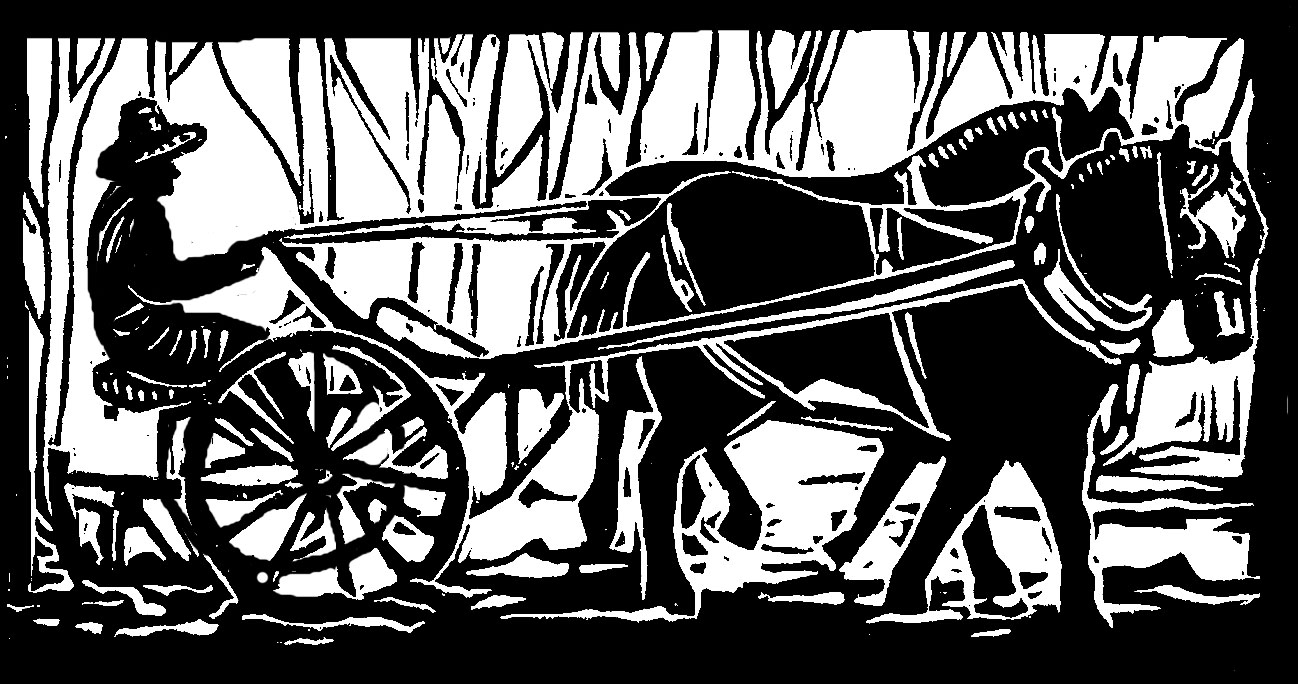
The draft horses feel like a new project in the spring too, despite all three of them being over 18, and well seasoned. They've worked the fields and pulled every farm implement hundreds of times. Yet in the spring, after a winter of mainly lounging about, eating hay, the horses seem to think everything is new. What's this? A harness? A bridle? A forecart? And you're going to hitch us to it? Good heavens! The horses start out with a rush and a roar while my farmer fellow, the teamster, holds on.

“How did that go?” I ask doubtfully when he returns after an hour of driving around on the dirt roads. The horse are sweaty and huffing and puffing.

“Great,” my fellow says. “A few more times and they'll be all settled down.”

But even with all the newness of spring, my fellow farmer cannot help himself: he is constitutionally drawn to the new and exciting. There have been many news in our springs together as farmers, right from the start: a new baby, a new team of horses, a new greenhouse, new equipment, our first year with a CSA garden. A few years later, there was the new fam in NH, a new team of horses, plus one more: the new foal born on our farm. This was enough new to tide my fellow over a few years, and then he started casting his eye about.

There was the spring of the new plow, the spring of the new greenhouse, the spring of the next new greenhouse, and the next new greenhouse, there was the spring of the new irrigation system, the spring of the new disc, of the barnyard project, of pasture rejuvenation, the spring of our first maple syrup-making, the spring of the next new team of horses.

Gradually all those new projects are incorporated into the regular work of the farm, and alas, they are no longer new, which means my fellow gets a certain look on his face once more. In a lucky year, it will only mean a few crop experiments: daikon radish as a cover crop, or a few feet of ginger grown in the greenhouse, or hibiscus plants in the herb area.

But other years, such as last season, are different.

“I've got a great idea!” said my fellow.

I don't know whether to groan or to laugh. “Oh?” I say, as noncommittally as possible.

“Mushrooms! Let's grow mushrooms! They'd be perfect, we've got practically everything we need already, the woods and shade, the logs, and we just need to buy a couple tools, and the spawn. Doesn't that sound fun?”

“But you don't even like mushrooms much,” I object.

“But you love them!” he answers gleefully. “Wouldn't that be great? All the mushrooms you could ever want?”

“Hmm,” I say. And then I start my litany: how much would it cost, how would we find the time to do it, how are we going to market the mushrooms, etc.

Since my fellow has lived with me a long time, he understands that this is just an introductory conversation. Over the winter, he will answer all the questions, and in the spring, we will find ourselves with a brand-new mushroom project.

The project may be, is kind of, fun and great, but also a) cost more than it was supposed to b) took more time than it was supposed to and c) did not produce as much as quickly as it was supposed to.

“It's a nice long-term project,” my fellow reassures me. “You love long projects, and listen to these great names: shitake, oyster, lion's mane, blewit.”

“They are nice names,” I admit, “but when will we ever get mushrooms?”

“We'll probably get some oysters this fall, and then next year we'll have a lot, of everything. Probably,” he adds again, hedging his bets.

That fall, my fellow goes to check on his new project. He comes back jubilant. “Look! Look!” he calls. He has two shining white oyster mushrooms, freshly harvested.

“Wow,” I say, impressed despite myself. “They must be my birthday mushrooms!”

“Happy birthday!” says my fellow, smiling, and I saute the two delicious birthday mushrooms in butter, and eat them all up.

They are, yes, the only two mushrooms of the year, but that just keeps the romance alive. (Not only does it keep the romance alive, but it also gives a farmer something more positive than the unwelcome news of the pandemic virus to consider.) Thus my fellow orders up another variety of shitake, three new oyster varieties, and the all-new reishi.

“Nice, huh?” he chortles over the mushroom catalog.

“Fantastic,” I say, happy with my fellow, happy with the mushrooms, and really happy that the fun and new will carry on.


Originally published in the Monadnock Shopper News, April 8-14, 2020

Farming Rules for Farming Fools

There is something about March: no matter what a wild mix it is, March puts a spring in a farmer's step and a light in a farmer's eye. Sure, March is slushy and mushy, meaning our driveway and pathways. March is patchy and scratchy, meaning our ragtag crazily shedding workhorses. March is flip-flop and keep you on your toes and make the best of it, meaning yes, the weather: rainy sunny muddy snowy sleety March.

March is also middling and muddling, meaning all the goofy mistakes we make, starting right in the beginning of our garden season. For example:

For years we have been hefting our ridiculously heavy propagation table in and out of the greenhouse. We built this table ourselves, pleased with its multi-purpose nature: we could start seeds on it in March, April, and May, in the greenhouse, and then move it to our distribution shed for the next six months, to provide a charming, rustic surface for our vegetable crates and trays and baskets.

Over the years, our table became even more useful. First we added a plastic tarp and hooks to cover the tender seedlings at night. Then we added a shelf, to hold supplies. Next we added a hinged door on the side, so that the table would function both as a healing chamber for grafted tomatoes early in the season, and then as a handy place to hide the supplies in the distribution shed, later in the season. When the healing chamber didn't prove to be dark enough, we added layers and layers of cardboard and rags to block the light. Then we added two more legs to the middle of the monstrous table, to keep it from collapsing from all its functions.

Every year required more screws, more patches, more supporting braces, more boards sticking out and straps hanging off to act as hand grips to try to move the heavier and heavier and heavier table from the shed to the greenhouse and back again. Every year also required more sweat, blood, curses, bruises and sometimes tears. The whole project cast a pall on the appointed table-moving day, once in late winter, once in late spring.

One year is particularly vivid. My fellow farmer spent a good hour with drill and hammer and stapler as I worked on the greenhouse beds.

“There,” he said. “I've got it in pretty good shape now.” My fellow sounded pleased. “Are you ready to move it?”

I groaned. “I guess.”

We girded our loins. We flexed our arms. We belted out the countdown. We heaved the table up in the air and . . . Crash! Everything my fellow had just fixed on to the table fell to the ground, whereupon we fell to the ground, howling with laughter, which is a sight better than curses and tears. When we recovered, my fellow said cheerily, “Well, maybe we don't need that part of the table anyway?”

“Probably not,” I quickly agreed, and we muscled up again, ready for our slightly lighter table.

Every year, along with patches, we also added more rules: We are never to carry this horrible table when there is two foot of snow on the ground. We are never to carry this horrible table when it is only the two puny farmers; we either needed our strong daughter, or an innocent visitor.

Plus we are never to carry this horrible table when the greenhouse is already full of knee-high tomato plants, which creak and whimper as we try to wiggle the table out without crushing plants or farmers. Or if we do move the table then, we will tell the daughter or the visitor that if we crush the plants, our entire season will be a disaster and we will probably have to stop farming and go to the poorhouse, which puts a look of high alarm on their faces and sends enough adrenaline shooting through their systems that we get the table successfully out.

Now, this year, there is a new rule. First of all, our strong daughter went off to college, and all our innocent visitors have wised up, which made us wise up.

“We are never going to move this horrible table again!” I shouted gleefully. “It's going to be a distribution table from now on, and we are going to use our little light tables for propagation!”

“Nice!” said my fellow. “And I just found great plans for an easy, light, mobile healing chamber for the grafted tomatoes!”

I looked askance at my fellow. “Really easy? Really light? Really mobile?”

“Yes!” he said “Yes!”

Ah, there it is: March. Such hope, such optimism, such light, such spring, such Yes.


Originally published in the Monadnock Shopper News, Mar 11- Mar 17, 2020

Farmers Get a Grip 

It was our chiropractor who first told us farmers to get a grip. One of us would mince along the ice, going out to feed the horses or bring in wood for the stove, tensing her muscles and getting her neck out of whack. The other farmer would stride out boldly on the ice, and then wham! fall right down, getting everything out of whack. Despite our differing temperaments and techniques, our chiropractor assured us that all we needed was to get a grip.

One day, a few winters ago, after mincing and falling yet again, we went looking. We found a pair of Vermont-made ice grippers, which pleased our buying-locally selves, and we invested in one pair, to see if we liked them. Well, we did like them, and we wore them all the time, taking turns going out on the icy paths around the farmyard.

Then, when we took walks together through the slippery fields, we had a dilemma, with only one pair of grippers. But did we really need another pair? Why, winter was practically over, and the budget is always a consideration. Couldn't we make do?

Thus the thrifty famers went for walks holding hands, with one farmer sporting a left-foot gripper, and the other a right-foot gripper, which made us fifty percent less prone to mincing or falling. Over the ensuing spring, summer, and fall, the budget committee had time to think it all over, and Yes! was the conclusion. We would buy another set of grippers. We happily reported this to our chiropractor, who heartily approved.

Now that we have had our Vermont grippers here in New Hampshire for a few winters, we decided to take them on a holiday, to Acadia Park in Maine. Originally, the holiday in Maine was intended to coincide with our 20th anniversary. Unfortunately, that fell in August, which coincides with high season in the garden. Could we afford to take a week off when the tomato plants were lush with fruit, not to mention the other vegetables flourishing all over the garden? Alas, we could not, we groaned, wondering why we ever decided to be vegetable farmers in the first place.

But then, just recently, our daughter wanted to visit College of the Atlantic, which is right next to Yes! Acadia Park in Maine! Allllll right! we said. What could be more fun than Maine mountains and ocean in January?

We stuffed our horses' mangers full of three days worth of hay, and filled our kitty's bowl. We rented the cheapest room we could find in our first AirBnB, and we got free meals through the college's dining hall, both of which fit nicely in a vegetable farmer's budget. We were off, and we were entirely blessed by the Maine spirits: we had two days of brisk but manageable winter weather, with virtually no snow and no wind, and even some sunshine. Of course, there was plenty of ice on the mountain path, but we had our grippers.

We got a grip, hiking for two lovely days, around Jordan Pond and up South Bubble Mountain, as well as climbing Cadillac Mountain, highest point along the North Atlantic seaboard. We climbed in the fog and frost and ice and deep stillness, and our spirits were refreshed. Of course, it was a bit of a letdown to come off the trail to a parking lot on the top of the mountain, as there is a seasonal paved road to the summit. Happily, there were no cars, and we didn't see a soul on either hike, which is another advantage of hiking mountains in Maine in January.

There, on the top of Cadillac, as the fog lifted briefly for a view to the south of islands and ocean, my fellow farmer said, “So, are you happy that you married me?”

“What?” I was confused, blissed out by the physically demanding and spiritually uplifting hike.

“Isn't this supposed to be for our anniversary?” he asked.

“Oh, yeah,” I said, laughing, and gave him a kiss. “Actually, I thought being married to you would be more like this.”

“What do you mean?”

“Oh, you know, more hiking, and less farming . . .”

Now we were both laughing. “Aww,” my fellow said, “what are we going to do about that?”

Well, come to think of it, this is the year 2020, and we have been married twenty years, and we could take 20 hikes in 2020. That would surely give us a grip, a darned good grip, all year long, on farming and relationships, on work and love, on all those demanding, refreshing questions . . .


Originally published in the Monadnock Shopper News, Feb 12 - Feb 18, 2020