A House Full of Garden

Things get a little crazy on our vegetable farm in November. We are so close to the end of the high season that we can taste it. But we don't want to just taste it. We want to gobble it up.

Thus, after a season of my reading material consisting mainly of the Sunday comics my sister saves for me, the Monadnock Shopper News, and overdue bills, I have recently checked out four picture books, two young adult fantasy novels, two adult novels, one spiritual autobiography, a book on pottery, two books of poetry, and a non-fiction book by Terry Tempest Williams, all from three different libraries, one of which is the bookshelf at my new friend's house. 

My new friend, who has many many wonderful books, including a whole section entirely devoted to contemporary poetry, and who is not farming this season, which she both regrets and does not regret, recently invited us to supper in order to “feed the farmers,” as she so nicely put it. She served us a feast of chickpea vegetable casserole, roasted peppers, salad with two choices of dressing, homemade applesauce, and chocolate cake and whipped cream. This after our high garden season of meals consisting mainly of popcorn, salad turnips, pieces of cheese, and in the fall, apples, with the occasional spoonful of peanut butter. (At least we grow two of these!)

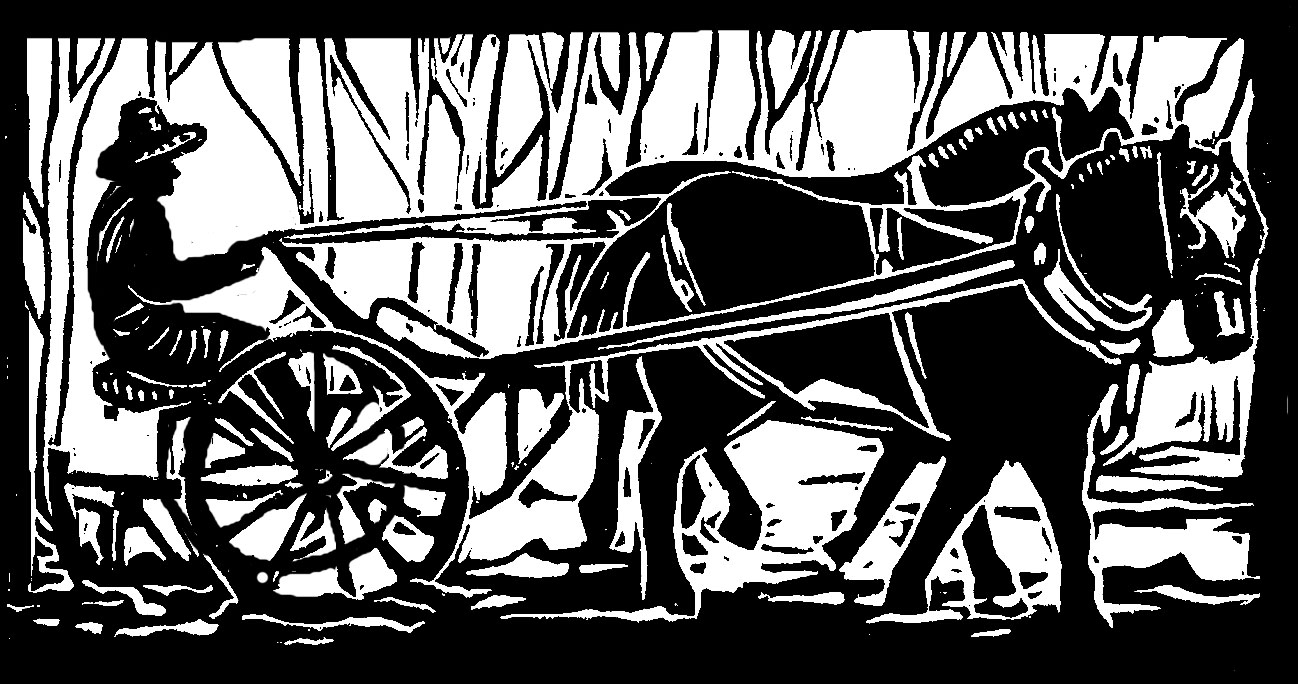
In the music department, our high garden season consists mainly of birdsong (beautiful), the horses' harness jingling (beautiful), and in July, the rain, rain rain (a little too much to be beautiful). There were also the sounds of our nightmares: the chewing, chewing, chewing of rodents in the garden and greenhouses. But now, in November, my fellow farmer has just gotten tickets for one, two, three, four live concerts, two of which are happening on the same day. 

“How are you going to swing that?” I ask him.

“Oops,” he says, and looks a little further into his ticket details.

“Yes!” he whoops. “Yes! One is at four! One is at eight! Two concerts on the same day!”

I have also begun to imagine other winter delights. Massages. Making holiday presents. Taking the big pile of donations, gathered last winter, and gathering dust all garden season, to the thrift store. A clean kitchen, regular meals, and, yes, changing the sheets on the bed, so that they aren't nearly as full of dirt as the garden beds.

In other words, we are really, really, ready for the end of the growing season.

But the growing season is not quite ready for the end of us. Though it was a very late first frost  this year, when it came, it came, and we were deluged by the last hoorah of the garden season. Suddenly everything that was in the garden seemed to be in our house. 

In the kitchen we have 200 heads of cabbage, 300 leeks, four trays of troubled vegetables, and eight five gallon buckets of apples. 

In the living room, cozy with the thrift store donations and the house plants, we have 23 trays and six buckets of green and ripening tomatoes.

In the front room, we have five crates of frantically dug ginger and turmeric plants, two crates of peppers, a bushel and two more buckets of apples, five bags of garlic, three buckets of fingerling and yellow potatoes, four bushel baskets of onions, a mess of chard, two trays of hot peppers, a bucket of tiny side shoots of broccoli, and three buckets of tomatillos.

Happily, most of this will clear out in the last two weeks of our CSA distribution season. Less happily, all these baskets and crates and buckets surround our wood stove, and we can't even get close to it, let alone start a fire. 

Ah, well … soon vegetables will turn into feasts, and fires, and music, and books.
 

Originally published in the Monadnock Shopper News, Nov 17 - Nov 23, 2021

The Gunk Miracle

There's a lot of craft to a compost pile: getting the right mix of ingredients, adding the layers properly, turning it at certain intervals, achieving the right temperature.

But what I love is the art of the compost pile, which has nothing much to do with the farmers' craft. We pile up the horse manure and the tired leaves from the outside edges of the lettuce or cabbage or spinach  and the grass clippings and the apple mash from the cider press, and sometimes we cover it if it's too wet or uncover it when it's too dry. We even have a compost thermometer, and we barter vegetables for a neighbor to turn the pile once in a with a little tractor. 

But the art: all that gunk miraculously turns itself into a beautiful pile of rich, dark compost.

So I am thinking of some other gunky things I'd like to add to the compost pile this year.

This year ties for our worst produce season ever, with the year we had three floods, and the year we had hail twice in July. A combination of rain and heavy rodent pressure meant that we lost roughly 2/3 of our broccoli crop, ½ of our beans. 2/3 of our beets, 2/3 of our carrots, ¼ of our onions, ½ of our cauliflower, ¼ of our peppers, 2/3 of our eggplant, ¼ of our kohlrabi, ½ of our salad turnips, more than half of our lettuce, and all of our peas, radicchio, endive, and escarole. We've always lost a little to weather and critters, voles, mice, woodchucks, rabbits, deer, but never in these quantities. (Never before have woodchucks chomped on zucchini and yellow squash!)

Huh. I'm going to put all that gunk right in the compost pile.

This year also ties for our worst hay season ever, with the year of hardly any rain and thus hardly any hay, and the year we put a lot of not-quite dry hay in because we had some willing labor and didn't want it to go away, so we picked up the hay too early. It was not a good idea. This year, of course, we couldn't seem to get any of our hay cut, and when we did, we couldn't get it to dry, and then, just as I was writing up my last column about our hay miseries, I heard my fellow come back down from the hayfield with the horses. 

“You're done already?” I was pleasantly surprised.

“Yeah, we're done, really done,” he answered, which wasn't the kind of done I meant. It was the kind of done as in the mower was completely busted up, and there would be no more mowing this year. So the hay we got in the barn wasn't so good, but it is quite a bit better than the hay we didn't get in the barn.

Huh. I'm going to put that gunk right in the compost pile.

I don't even want to add my third thing, which is far more daunting: the loss in the last year and a half of three former or current CSA members due to COVID and other medical issues. We knew one as a teacher, one as a librarian, one as a farmer. We need all the teachers and librarians and farmers we can get, and we weren't ready to say goodbye to any of them. Then, just in the last month and a half, we lost two dear mentor/friends, two people who loved children and draft horses and farming, one of whom kissed me tenderly the last time I saw her, and the other of whom was wont to say, “Just spread my ashes on the manure pile.”

This made us laugh, even as we cried, and brings us right back to the compost, and to the hope that all our gunk turns into something rich and beautiful, fertile and abundant, for the next season, and the next and the next, here in this mysterious world.

Originally published in the Monadnock Shopper News, Oct 20 – Oct 26, 2021

Haying with Horses

Haying with horses on a New Hampshire farm is an enjoyable experience. Sometimes.

This season, haying has been dreadful. All that rain in July meant either no, or bad, haying. It also meant that the new growth was pushing up into the old growth, making for a miserable mowing in August, with big clots of grass binding up the sickle bar and the farmers' and the farmhorses' tempers.

The raking and the loading were also unhappy affairs, thanks to those same heavy, wet, sure-to-mold-in-the-barn clots. We would toss the wet off the wagon in the field, feeling the kind of grump that comes after you've spent a long time making a nice supper, and it turns out badly. There it is, the same amount of work, but it doesn't taste that great, which is probably what our horses will be saying about the hay all winter.

On top of that, all the hayings ran right up against our little bit o' summer fun.

First was the long-delayed-by-the-pandemic visit to my family. We didn't arrive until 11:30 p.m., after the haying. But our nice sleepy relatives cheered our arrival.

Second was my fellow's family visit, here on the farm, also pandemic-delayed. These nice alert relatives helped us hay and ordered take-out for us, so that we could have a meal together at 8:30 p.m., after the haying.

Third was our nice Philadelphia friends' visit, who also helped us hay, and made us a delicious supper, which we ate at 9 p.m., after the gloomy haying. 

“Did it turn out the way you wanted it to?” the supper-maker asked kindly.

“Kind of hard to tell, isn't it?” We sort-of laughed, thinking of the crummy hay in the barn.

Most recently, the hay ran up against a much-anticipated Rhiannon Giddens concert.

That day, we got out to the field by three, hoping the hay would be dry. We should have had plenty of time, except there was way more hay than could fit in one load; and the horses were grumpy and not working well together; and the farmers were grumpy and not working well together. In fact, I accidentally hit my fellow with my pitchfork tines, which caused him to swear and me to profusely apologize. 

Then, since we had to unload the wagon in order to pick up the second load, and the barn is getting full, which means a long slow unloading, with my fellow on the wagon, and me stuffing the hay into the rafters, and hay occasionally falling back down, which is maddening, and causes my fellow to really push those forkfuls of hay up firmly, and causes me to really grab hold of the hay firmly, all of which then caused my fellow to accidentally hit me with his pitchfork tines.

Then I swore, and he apologized profusely.

We got the last of the hay on the second wagon at 4:59. I wanted to leave at five, after my pleasant shower and change into fancy clothes. Instead, I raced in to swipe off the worst of the sweat and grub, and to gather snacks, vaccination cards, tickets, water, wallets, and keys. My fellow unharnessed the horses, and by the time I ran out to help lead the horses to pasture, my fellow had already taken all four at once up the narrow lane, which did not please them. But there was my sweet fellow, running down the lane with his shirt off, preparing to put on his fancy clothes.

Here is the nice end of the story: we got to the concert on time, and it was wonderful. I wish I could also say this was the end of the haying and my complaining, but alas, it is not, as we still have a section and a half to go. 

Of course, haying with horses still could be enjoyable, even in this season. But I'm not holding my breath. 


Originally published in the Monadnock Shopper News, Sept 22 – Sept 28, 2021


The Reusable, Indelible Tomato (Tag)

August on the farm: tomatoes, tomatoes, tomatoes!

Of course, tomato-growing starts much earlier than August, with sowing in late February, grafting in March, transplanting in April, clipping up and pruning in May and June, and our first ripe tomatoes in early July.

This year in July, along with ripe tomatoes, we had a late Father's Day surprise. The surprise had been percolating for some years, and involved those very tomatoes.

When we sow our seeds, we label each variety with wooden tags and an indelible marker, but between the mighty sun, the water in the irrigation system, and the soil itself, the marker becomes entirely delible (look that word up!). Thus, just about the time when my tomato-loving fellow is ready to compare varieties for taste, texture, productivity, size, and resistance to troubles, he can't read the tags anymore.

But this year, thanks to a whole other interesting farm project, I had a brilliant idea. The idea came from the mushroom yard, a lovely little patch in the woods where my fellow grows shiitake and oyster mushrooms inoculated on logs. This year we are getting a good flush of shiitake mushrooms, and it's easy to tell the history of each mushroom log, because, yes! there are clever little metal mushroom tags. The tags are bits of cardboard, wrapped in thin metal. Writing on the tag with a ballpoint pen leaves an indentation in the metal, and voila! a truly indelible label, impervious to sun and rain.

One Saturday morning in July, while my fellow was busy selling tomatoes and mushrooms (and other produce too) at the Farmers' Market in Keene, I took the mushroom technology to the tomato greenhouse. I also brought along the daughter who makes the Father's Day possible, and we spent the morning ignoring all other urgent farm projects. Instead we labeled tomatoes, tying the new tags at eye-level, cross-referencing with the still-legible tags in the soil and with the scribbled chart I make when we transplant.

Like pretty much every farm project, this one took a lot longer than expected, and it was a lot hotter in the greenhouse than we would have liked. But we accomplished it, and gee, was it fun to show my fellow the surprise! He marveled in a most satisfactory manner.

Once the tags were in place, my fellow could easily tell which variety was which. In fact, it was so easy that he soon reported that Great White, a pale yellow tomato, was turning red. Huh. We did some more chart and wooden tag cross-referencing. Seems one plant had died, which made for a glitch in the system. But it was easy to fix, and now Great White is its proper pale yellow.

Another day my fellow discovered a heart-shaped tomato labeled as a regular old round tomato. That was easy to fix too. Then there was the time when it appeared that Chef's Choice Bicolor and Vintage Wine were the same tomato, despite being planted in two different greenhouses, and bearing two different labels. (Gosh, we were getting awfully hot and hungry on labeling day, but I didn't think our efforts were that far off. Our tomato tags were turning into playing tag with tomatoes!)

That puzzle we didn't solve until we had one tomato ripe from each plant on the same harvest day. Both varieties are beautifully striped in green and red, but one is green and reddish-orange striped, and the other is green and reddish-pink striped. Whew. The labeling system held up.

By far the most satisfying moment was when my fellow discovered that one of the new standard varieties we were trialing seemed to be looking particularly fine in the leaf department. Normally, by August, we see quite a bit of leaf-yellowing in our greenhouse tomatoes, but the Caiman variety is still nice and green. Well! Perhaps we'll grow more of this variety next year, thanks to our wonderful new labeling system, and our reusable, indelible, mushroom-tomato Father's Day tags.

Originally published in the Monadnock Shopper News, Aug 25- Aug 31, 2021