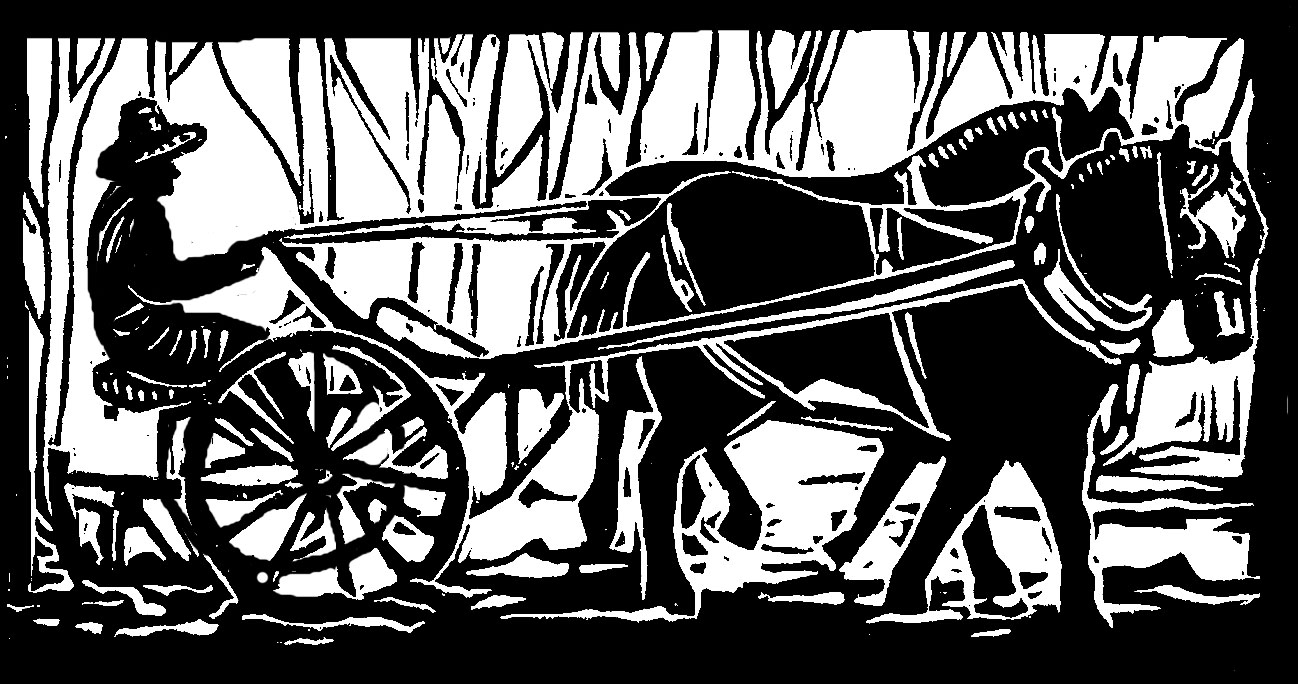
Pretending Farming Doesn't Exist

It was such a wretched season on our New Hampshire vegetable farm, what with the cold wet spring, and the limping collapsing draft horses, and the cold wet limping collapsing farmers, that we were glad to say goodbye to the whole year. 

Once our CSA vegetable distribution was finished up, and our horses were settled into the winter paddock, and the limpers and collapsers had recovered, all we had left was cold and wet, which we've solved by sitting by our woodstove. 

We sit by the stove, and ask ourselves probing questions, such as "Now why are we doing this again?"

Then we refuse to give ourselves a pep talk about fresh food and sustainable farming and local economies and healthy environments. Instead we pretend that farming doesn't exist. What fun!

It is so much fun that we take ourselves to a nice concert in South Hadley, Massachusetts. The concert is in a pretty little Episcopalian church, clean and bright and dry and tidy, which reminds us not at all of farming. 

We listen to the wonderful Scandinavian folk'appella group Kongero. Four women with stunning voices sing in Swedish for two hours, and it doesn't matter that we can't understand a word of the lyrics, because certainly they are not about farming. 

The singers do take pity on the mainly English-speaking audience, and tell us a little in English about their group. They say that kongero means spider, in a Swedishish-Norwegian dialect, and that a music reviewer suggested that they were one voice with eight legs. 

Although we still don't know exactly why the group choose kongero for a name, we can only assume that the Swedish have great love for spiders. We are also a little concerned that spiders, especially the big beautiful slightly scary garden spiders, are veering awfully close to, you know, farming. 

Then one of the singers introduces the next selection, a very old song. A very old . . . cow-herding song. Uh-oh. She even translates the verses. 

Then she tells us how she spent her summer working at a living history museum. It was a historical farm of the late 1800s museum. Oh, geesh. Not only that, she was the goat-herder. Not only that, it was a beautiful song. 

Well, we gave up pretending that farming didn't exist. Instead we had a nice little chat at intermission with the goat-herding singer, about our nice little CSA farm with our nice not very little draft horses and our nice many-sized vegetables, and she told us that she grew up in a 24-person northern Swedish village, on a small farm with chickens and sheep and pigs and cows and horses. 

She said that in Sweden, too, agriculture has been taken over by big corporations, but that little farms were coming back. Oh, nice little farms, keep on trying! was the general gist of our conversation. 

So there we two New Hampshire farmers were, right back to farming, and we were even feeling kind of happy about it. If only we could sing as beautifully as a spider when we were herding our (virtual) cows and our (virtual) goats and our (very real) horses and our (very real) vegetables, we'd be doing pretty well. 


Originally published in the Monadnock Shopper News, Jan 10 - Jan 16, 2024

Horse Sense

Our four work horses have had a tumultuous season. When three out of four couldn’t work, from age or injury, we borrowed a horse from our farrier. Introducing a new horse to a herd is always a tricky business.

We started with the new mare, Button, and our horse, Clyde, as they would be the working team for a while. They got along nicely. Meanwhile Molly, Moon, and Ben were in our neighbors’ pasture, where they always spend part of the grazing season. When Molly recovered from her lameness, we brought the three back home. 

It was a beautiful sight: five big draft horses, one black, one red, two gold, and one cream, all galloping around on the green green grass. Great! we said, until the next morning, when Moon got out, all by himself, and went back to the neighbors.’ 

We fetched Moon home, thinking he had just gotten tangled up somehow. But it turned out that Moon was sore afraid of Clyde, because Clyde had decided that with two mares around, it was time to be a serious boss hoss, and he chased Moon and Ben away aggressively.

Ben is all right with some distance, but Moon grew up with Molly, and he wants to be next to her at all times. Clyde would no longer tolerate this. Thus we had a new configuration: the main herd (of three), and a new bachelor herd (of two), just like in the wild. Okay, we thought, that’s fine.

The next escape was an hour later: Moon and Ben got out and went to the neighbors.’ We gave up, and left them there, thinking these horses had a lot more time to get out than we had to get them back in. Occasionally there was some neighing back and forth, but for the most part all was calm.

After nearly two months, when we finally had our hay and garden work done, we took Button home. We brought Moon and Ben back into the fold, thinking there would be no problem. Ha! 

Clyde still chased Moon and Ben away, a long way away. The two pairs of horses had lots of room in our big pasture, but we were beginning to wonder what we would do when it was time to bring them all into the smaller winter paddock.

By November, trying to hold off on the paddock, we were setting out hay in the pasture. But when the snow came, Molly and Clyde walked past the hay, and went on a jaunt to the neighbors.’  

“For crying out loud,” we groaned. All right, now Molly and Clyde could stay at the neighbors.’ But in fifteen minutes, they had gotten out of the neighbors’ pasture and come home again. This was also the day before Thanksgiving, and we had planned to visit family. These horses were not helping. We ended up taking all four of them back to the neighbors’ pasture, along with two mangers of hay.

Happily, everything went fine while we were away. When we got home, we wanted to bring our horses home too, where all the hay and water was. So we split our winter paddock, with a classy arrangement of metal gates and a wooden pallet, because the gates weren’t quite long enough. 

We fed the two horse pairs at opposite ends of the paddock. Gradually, we planned, over some weeks, we would bring them closer and closer together, and maybe they would all remember how to get along. 

But the funny thing was, all four horses already remembered. On day two, they were calmly eating near each other, next to the gate divider. By day four, we opened up the gates. By day six, we took the gates down entirely.

“What’s the big deal?” the horses seemed to say. “This is how we always spend the winter.” 

Huh. Well. We humans might have saved ourselves some trouble, if we had a little more horse sense.


Originally published in the Monadnock Shopper News, Dec 13 - Dec 19, 2023

The Dedication of the CCCD

Recently I gave a short talk at the Cheshire County Conservation District’s annual meeting. The meeting happened to fall on the same evening as the 22 degree weather prediction. Happily, the CCCD fed us a good hot meal, and then we went back to the garden, from 9 p.m. to 2:30 a.m., pulling and storing crops before the freeze. 

You’re probably glad you missed the headlamp harvesting, but here’s the speech:

My fellow and I started farming because we like to work outdoors. We started vegetable farming because we like vegetables. We started vegetable farming with draft horses because we like horses.

But we did not start vegetable farming with draft horses because we like money.

In fact, budgeting, marketing, and big-money projects are one of the toughest parts of small, sustainable farming. The Cheshire County Conservation District has helped us with our big-money problems by connecting us with the Natural Resources Conservation Service, and we’ve received grants for fencing, irrigation, and greenhouses.

But the CCCD has also supported us in our more ordinary, daily project of making our living by selling vegetables. Here are three mini-stories about a few of the district’s programs, programs which address both food insecurity and farmer insecurity.

The first program is Veterans' Appreciation Month at the farmers’ market, which happens every September. Veterans receive vouchers for fresh food, and farmers receive a boost in sales, as September is also the month when foot traffic goes way down at the market. 

Many veterans tend towards the snack veggies – a pint of cherry tomatoes or some carrots.  But one year, my fellow came home from the market saying, “One of the vets got almost all his vouchers in hot peppers. He’s going to have one peppy snack!” Considering that hot peppers were only a quarter apiece at the time, I’d say that vet was going to have a lot of peppy snacks!

The second program is the Granite State Market Match, which offers double the spending power for people who qualify for SNAP benefits, at the market or as CSA members. The program attracts both returning and new members to our farm. One of the first of those new members was a chef. 

The chef was married, with a job, a spouse, two very small children and a brand-new baby. He always looked exhausted; still he was glad to see the lettuce, the potatoes, the squash, all the vegetables in his weekly share. But what really caught his attention was the unusual things that my fellow gets excited about trialing in small amounts every year: hibiscus, licorice basil, ginger, turmeric. Some of our CSA members might look askance at these oddities, but our chef’s eyes would light up when he came into the distribution shed: “Oh wow, is that Thai basil? I know exactly what I’m going to make with that!”  

The third program is the Monadnock Farm Share Program, which provides half-price shares for people with lower incomes. The program is a collaboration between regional CSA farmers, the CCCD, and local business sponsors. 

One of our long-time CSA members, with serious health issues, which then caused serious budget issues, happily joined the program. She loves tomatoes, and always whooped when the first tomato came in. She also always wanted to have a tomato parade for us. When our dear friend died, at 56, her request was to have her memorial service at our farm. We finally had our tomato parade, as we sang and cried our way up to one of our horse pastures, to say goodbye to our friend.

These kind of deep connections with the people who eat the food we grow is part of what keeps my fellow and I farming vegetables with draft horses. The Cheshire County Conservation District helps us turn that farming into a living. We love the district’s dedication to food access and food security and food justice, and we also love their dedication to local gardeners and farmers.


Originally published in the
Monadnock Shopper News, Nov 15 - Nov 21, 2023

Borrow-a-Draft-Horse Agency: Thank Goodness for Farriers, Mothers, and Draft Horses

We farmers were stumped. With three out of four draft horses unable to work, due to injury, and our first decent stretch of haying weather coming up, late in the summer, we needed to borrow a draft horse, in a hurry. But how likely was that?

“Maybe we could call the Borrow-a-Draft-Horse Agency?” I suggested.

“Let’s think,” answered my fellow farmer, “Who could we even ask? X’s team is pretty old, and he won’t want to split them up, anyway. Y’s horse might like the company of our horses, but Y would miss her horse too much. Let’s try Z.”

“And A, and B, and C,” I added, so we made phone calls and sent emails, thinking our chances were pretty slim. How many people have draft horses anyway, and who in their right mind would ever loan one?

Luckily, our farrier, Jake, whose generosity far outweighs his right-mindedness, said “Sure, you can borrow Button. She could use the work.”

We could hardly believe it, and we not only borrowed the horse, but the horse trailer to haul her. Button, who is half-Belgian and half-American Cream, is a big horse, a beautiful pale gold color. She was also out of shape, a “cream puff,” said our farrier’s mother, Mary. In fact, Button was so round and gold we were tempted to call her Butterball instead of Button.

Button was not pleased to be separated from her two pasture-mates. Happily, Mary helped us, leading Button into the trailer, multiple times. Button backed, right off the trailer, multiple times. Mary sighed, led Button’s mother into the trailer, tied her, led Button in, tied her, then untied and backed Button’s mother off again.  

Thank goodness for mothers, we were thinking. 

But “Thanks, George!” was what Mary said, relieved. George is Mary’s spouse, and Jake’s father. George died, in 2021, of cancer. George was also a farrier, and a teamster, and a draft-horse legend, and he carried that great spirit of generosity we still see in Jake. We all miss George. As my fellow farmer said, “I never thought I’d get to drive a horse that George trained.”

Button gradually settled down on our farm, showing her solid training, and remembering her good manners. But that didn’t mean she wasn’t a handful. George liked “hot” horses, and Button is hot. (She’s a hot button!)

At our farm, we introduced Button to just one horse, Clyde, while our three recovering horses stayed at our neighbors’. Luckily Clyde is a very steady, sleepy horse, so he made a good calming partner for the high-headed Button. 

Button was learning a lot, and so were we, such as how Button likes to run away when she sees a person coming with a halter. A person without a halter? Button is your best friend. Still, a horse-horse relationship always tops a horse-human relationship, and Clyde never minds being haltered. So we would halter Clyde, as Button trotted around in circles, and then walk away. By the time we got to the gate, Button would give up, and stand for the halter.

Button loved Clyde, but she didn’t love all the rest of the new stuff: new stable, new harness, new noisy scary farming activities. But she managed. She even muscled up. 

“I think we’ve gotten her from cream puff to cream cheese,” my fellow reported to our farrier and his mother. “She’s doing great.” 

Button is doing great, and are we ever glad to have her visiting, hot or not. She is getting us through one long hard garden season, thanks in no small part to George, and to his human and horse legacy. 
 

Originally published in the Monadnock Shopper News, Oct 18 - 24, 2023