Farmers, Novels, and Bonbons

One of the strange things about farming is that everyone else isn’t farming. In summer, when we are racing around the fields with our tongues hanging out, everyone else is going to the seashore, or to their cabin in the mountains.

Farmers are out of sync in the wintertime too. Just when people are groaning about having to wear fifty layers to go outside to scrape the ice off their windshields and brave the roads to get to work, we are lying in bed, contemplating a day of reading novels and eating bonbons.

Before we get to the novels and bonbons, however, we have to make it through the last two weeks of the CSA vegetable distribution, which are always a big push. We empty the greenhouses and gardens, keeping enough vegetables for our own use. But there’s always a lot of counting: how many leeks divided by how many members, how many Brussels sprouts, winter squash, pounds of carrots, potatoes, onions, etc.

We’ve been farming long enough that we have a pretty good sense of amounts, but there are always surprises. For example, this year we had a banner crop of fall carrots, and we didn’t even realize it. We could have started digging and distributing them much sooner. 

But we waited until the last month of distribution, and suddenly realized we had mountains of carrots. How many pounds of carrots would our hearty CSA members take on harvest day: one, two, three, four, five, six? Every distribution day we upped the carrot pounds. (Five seemed to be the limit, as on the day of six we had carrots left in the bins.)

Our Brussels sprouts were also abundant this year, and a late spinach planting in the greenhouse came on beautifully. We did the best we could with our counting, but after the last harvest day, when we had a moment to breathe, we made one more assessment. Alas, we still had a lot of carrots. We had a lot of Brussels sprouts. We had a lot of spinach. We had way more than we could eat over the winter, and the farmers’ market had ended weeks ago.

It was time for a Bonus CSA pick-up. We sent the word out to our members; our members responded gleefully. We, however, were not so gleeful. It was the grumpiest harvest morning of the year, even though it wasn’t raining, even though there would be only a few hours of work getting the three crops ready.

By golly, we were grumpy, as we harvested and trimmed and washed spinach, as we weighed carrots, as we used our biggest loppers to cut down the enormous stalks of Brussels sprouts.

“I don’t know what my problem is,” I finally said to my fellow farmer.

“Me neither,” he answered. “I mean, not your problem, my problem. I feel really grumpy.”

“I think it’s because we’re supposed to be done harvesting for the year.”

“Yeah! We’re supposed to be lying in bed, thinking of everything we don’t have to do with vegetables today!”

Well, we grumped our way through the harvest, and then there was the nice part of the day: seeing how happy people were about more vegetables, even carrots. Since this was a farm-only pick-up, rather than our usual farm or town pick-up, we even had a few town pick-up members that had never been to the farm. 

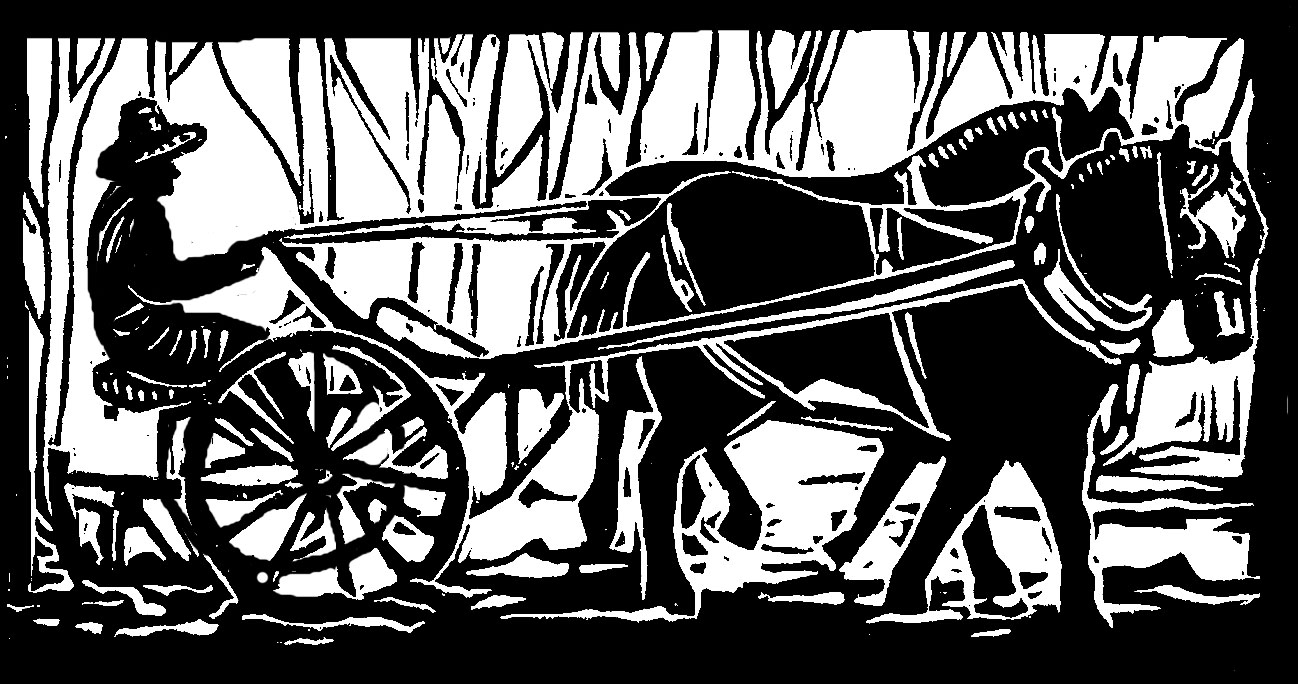
The farm tour went like this: this is our garden, where there used to be a lot of vegetables. This is our mushroom yard, where no mushrooms are growing. These are our horses, who are done working for the season. These are the farmers, also (mostly) done working for the season (except for rolling up irrigation, cleaning out greenhouses, and other trivial matters).

And these are the novels, waiting to be read, and the bonbons, waiting to be eaten.


Originally published in the Monadnock Shopper News, Jan 8-14, 2025

Waste Not, Want Not

 Story #1: Recently this farmer attended a meeting that had nothing to do with farming. But it was harvest day, and in order to make the meeting, I had to rush out of the field, which meant I was in my working clothes.

My working clothes tend to be grubby and ragged, which generally doesn’t bother me, except when I have to go to a meeting of non-farmers. Then I might throw a decent layer over the grubby and ragged, which is exactly what I did.

Unfortunately, the meeting was held in a heated building, rather than a chilly field of vegetables, and I got way too hot very quickly. It was an interesting meeting, so I wasn’t really thinking as I shed my top layer, revealing the grubby and ragged.

At the break, however, a very nice person, whom I had just met, said very nicely to me, in tones of both awe and delicacy, “I’ve just been noticing your coat.” 

I laughed a little, suddenly realizing I had revealed the ragged and grubby. I said, “I’m a vegetable farmer, and this is my farm coat.”

“It’s a great coat,” answered the person. “I’m just thinking about the play I’m going to be in soon, and I need a certain kind of coat, because I’m playing a Scottish tramp from last century, and I wondered . . .”

Well. That made me laugh some more. “Do you want to try it on?” I asked, and he did. He even took the coat to his rehearsal, but alas, my grubby and ragged farm coat did not make its stage appearance, as the time period of the play required a knee-length coat.

Story #2: Recently a CSA member and I had a gripe session about wastefulness. She was mentioning a sustainability program that would assist farmers in purchasing electric tractors. 

Sounds like a great idea, I said. 

But, she went on, one of the requirements of the program is that the farmer disable any conventional tractors. 

We were both flummoxed. There is something amiss in that logic. To wreck a functional tractor? How is that sustainable?

Story #3: I was picking up my daughter from the train station in Brattleboro. It was another cold day, and as I waited outside on the platform, I was glad I was wearing the multiply-patched lined jeans that came from my dad. He wore them for many years of his farming life, and my mother patched and patched them. When I wear them I am warm, and when I wear them I can think of my mom and dad, both of whom I’ve lost in the last year and a half.

So there I was, warm, and thinking of my parents, when the train rushed in, and my 24 year old daughter arrived. “Wow,” she said, “You look cool in those pants!”

I was flattered. I looked cool at the same time I felt warm. Not only that, I was firmly in sustainability mode, which is also thrifty mode, which is also farming mode. 

Story #4: I grew up on a small family dairy farm, with “Waste not, want not” as a byword. I took it seriously. When I gave the rabbits fresh water, I emptied the eighth inch of water left in the bowl into the cow’s bucket. (Apparently, I thought that amount of stale water wouldn’t hurt a cow.) “Waste not, want not,” my mother chuckled.

There is another saying, from the Depression era: “Use it up, wear it out, make it do, or do without.” There is a lot of wisdom in that saying, whether it is in fashion or not.


Originally published in the Monadnock Shopper News, Dec 11-17, 2024

Farm Pooch

Dog, dog, dog, dog, dog. This vegetable farmer was amused to realize that the last five out of six sustainable farming columns have been about a certain farm puppy. Not only that, when we had our regular summer visitors, we talked about the farm less than the dog: the dog books we read, the dog documentaries we watch, the dog training classes we attend.

But really, this dog is all about vegetables and farming. 

Green beans: the dog loves ‘em. Brussels sprouts: the dog loves ‘em. Carrots, potatoes, tomatoes: loves ‘em.

Kale, winter squash, beets, zucchini. Yes, yes, yes. Also berries, apples, and cider. (Not to mention corn, popcorn, dog food, dog treats, peanut butter, and cheese, none of which we grow.)

The farm pooch also loves to dig holes, especially nearby a farmer digging carrots, or less pleasingly, in a garden pathway, where a farmer has to look sharp or fall in a heap.

The dog loves row cover, too, which the farmers use to protect crops from bugs. However, the farmers like their row cover without holes. The dog has his own designated piece of old holey row cover, which he periodically improves with more holes.

Plus the dog loves grain bags nearly as much as the farm draft horses do, except they like what’s inside and he likes what’s outside. What’s more fun than a noisy flappy empty feed bag to thrash about?

He does not, however, love the draft horses. They’re mighty big, and sometimes he stands three feet in front of one and barks, until a) a farmer gets annoyed and calls the dog away or b) the horse gets annoyed and walks toward the dog. Then the dog runs away, wisely.

The dog does love the farm cat, who does not return the favor, and no wonder, as the dog bounces around the cat, inviting her to play, and occasionally chases her, if a farmer is not quick enough to redirect him.

The pooch also loves the farmers’ market, and waits in the truck for an hour on market mornings, eager to go. (However, as the season went on, he became altogether too eager at the market, what with all the other exciting dogs and people. Bark, bark, bark, he said. Bounce, bounce, bounce. Leap, leap, leap. Alas, he lost his market privileges.

Happily, there was only one market day left, and there is only so much dog sadness I can stand: I took him on an alternate farm excursion to Stonewall Farm, where he invited the goats to play. At least he didn’t bark at them.)

This dog also loves the CSA members who come to our farm, and mostly he behaves when they come. Recently, though, as a CSA member came up the drive, the dog, after a nice initial greeting, jumped on her. 

“Off!” I said firmly to the dog, and “Oh, I’m very sorry!” to our CSA member.

“Don’t worry,” she answered, “I love dogs,” which was lucky for us. I hastened to tell her that our pooch hardly ever jumps, and had just passed his canine good citizen test at our Monadnock Humane Society class.

“Well, that’s wonderful,” she answered. “What did he have to do, vote?” 

 I laughed, thinking: Hmm . . . if a dog could vote, we might have kindness, understanding, good food, good friends, a comfortable bed, a little freedom to run in the fields  . . . 

Then I explained the ten canine good citizen tasks. On the test, the pooch did beautifully on nine of the tasks. He did need a second chance on the tenth, which was listening to his person instead of leaping delightedly at a new dog. 

“Well, I think he’s just perfect,” said our CSA member, scratching the farm pooch's ears.

“Thanks,” I answered. “We go to training classes so he doesn’t jump on CSA members.” Then we both laughed, as the pooch wagged his tail innocently.

Originally published in the Monadock Shopper News, Nov 13-19, 2024

Nice Little Farm Project

My fellow farmer and I have been growing shiitake and oyster mushrooms in a little patch of woods on our vegetable farm for some years now. Although I love eating mushrooms, I never imagined myself growing any. Although my fellow does not love eating mushrooms, he had enough imagination for both of us.

He read books, searched the Internet, and watched documentaries on Japanese mushroom-growing techniques. Then he persuaded me to watch the nice old man and old woman harvesting their mushrooms in Japan. I still wasn’t convinced, mostly because I didn’t want to start any big new projects. Then my fellow started calling it a little project. A nice little project that we could easily do in our nice little patch of woods.

“Hmm,” I said.

“Or how about this,” he said. “Somebody wants me to grow saffron on their land in Vermont.” 

“In Vermont?” I said, as in “Are you crazy?” 

“Did you know saffron is the most expensive spice in the world? It sells for $30,000 a pound. It’s worth more than gold!”

“Why is it so expensive?” I asked, as in “Remember the maple syrup we used to make, that nice little project that we could easily do in our nice little patch of woods, and how we discovered quickly why maple syrup was so expensive?”

 “It’s because saffron is really hard to harvest. You have to collect the stamens from the crocus flowers by hand. You need 75,000 blooms to make a pound. Interesting, huh?”

“Hmm,” I said.

“Or I could prune cannabis plants in Massachusetts this winter. There’s a place looking to hire people with plant experience.”

“Hmm,” I said. 

“What do you think?” my fellow asked enthusiastically.

Faced with a fellow farmer who loves new projects, and faced with the options of a) a farmer smelling like cannabis, an odor I do not enjoy, all winter, or b) a farmer travelling 40 minutes a day to tend saffron in Vermont while the vegetables languished on our NH farm, I chose c) the nice little mushroom project in our nice little patch of woods.

My fellow was thrilled. He knew just where to buy the mushroom spawn, the logs, the tools. “Isn’t this great? We already have the tub we need to soak the shiitake logs! We already have the pond! We already have the woods!”

“Hmm,” I said, somewhat daunted by the start-up costs of the nice little project.

“It’s long-term,” my fellow assured me, “The costs will spread out over time. It’ll be at least a year before we get anything. It could be five years before we’re up to full production.”

I did not find this particularly reassuring. 

But I have to admit that this is one nice little project I’ve come to like. Growing mushrooms is just as miraculous as growing vegetables: dirt and seeds, wood and spores, turning into food we can eat. Plus mushroom growing requires a different set of skills: we learned to drill holes in the logs, inject the sawdust and mushroom spawn mix, brush on wax to keep the logs moist. Then we waited.

After a year, the ends of the logs were turning white from mushroom colonization. We soaked our first batch of logs overnight, and stood them against a waist-high wire in the shady, cool mushroom yard, a nice change from our hot and sunny vegetable garden.

We could hardly believe it when, after a week or so, we had our first flush of shiitakes. There were the logs, studded with rich brown mushrooms, right there in our own nice little patch of woods.

“Look at that!” said my fellow farmer, “It worked!” He harvested the mushrooms happily.

“We can have them sauteed in butter for supper,” I said gleefully.

“Hmm,” said my fellow, as in I don't really like the taste of mushrooms.

I laughed. “You’re not even going to try them?”

"Hmm,“ he said. "Maybe a tiny bite . . .”

Originally published in the Monadnock Shopper News, Oct 16 - Oct 22, 2024