Wrestling with the Water Trough 

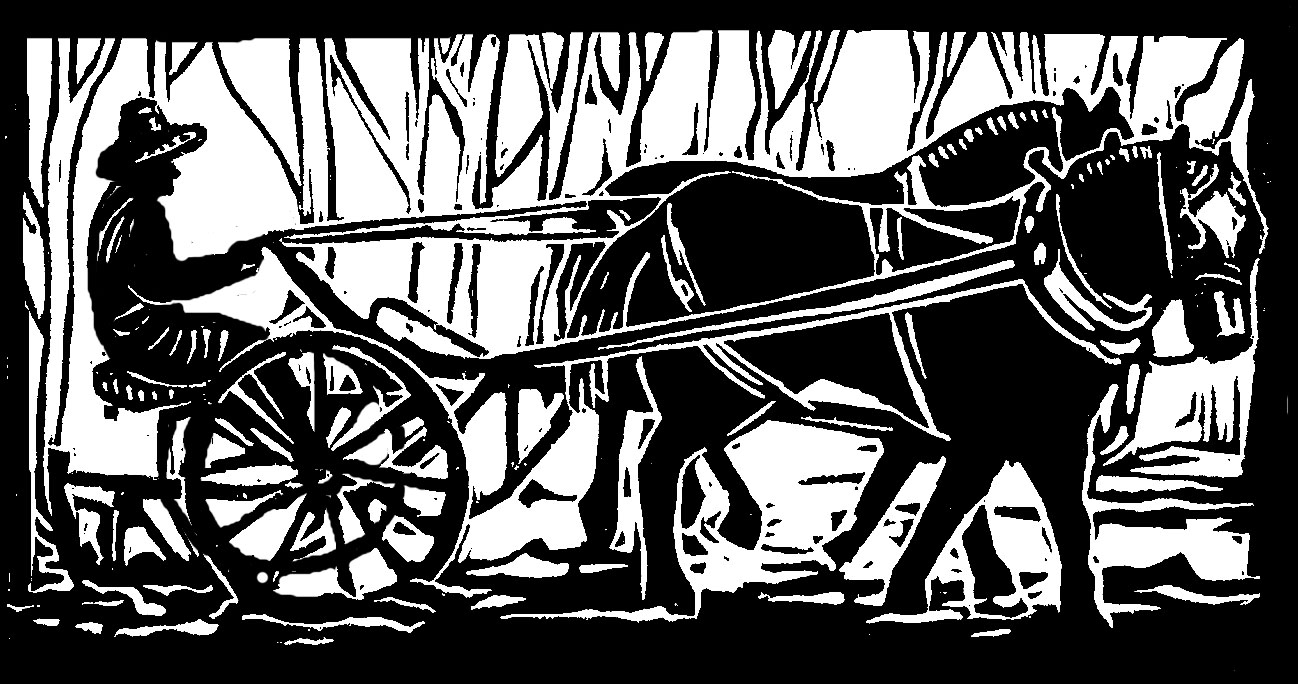
Winter on a vegetable farm brings rest, but it also brings new tasks, especially with our draft horses. Summer means pastures and streams; winter means feeding hay and grain and wrestling with the water trough. 

Some winters are mild enough that we don't have to do much. Not this winter! This winter we brought out all the tools: crowbar, digging fork, shovel. Sometimes we just crack the surface of the ice for the horses to drink. The horses will also break the ice with their muzzles and the occasional hoof if necessary.

But as it gets colder and colder, we have to smash up the ice and clear it out of the trough three times a day with our various tools. Of course, we also have to fill the trough with water more frequently, which means dragging the wild and difficult hose out of the cellar through the house, as the hose catches on everything it can.

In any case, if we want to leave for a few days in the cold weather, we need a different method of keeping the horses in water. It's a more expensive method, but it sure is handy: the electric de-icer.

Over the years, we've had several, as they don't seem to last long. We've always gotten the kind that screws into the drainage plug at the bottom of the trough. We've had horses who like to play in water before; Benny, for example, would flip the hose out of the trough and watch the water run down the driveway.

But we're at another level now, thanks to one of our new horses. One spring day, not long after Willow and Fern came to the farm, we heard vigorous splashing and significant thumping from the paddock. When we went to investigate, there was Willow with both front legs in the trough. We thought she had made a little mistake, kind of misjudged things.

We were wrong. 

Turns out jumping in the trough is a regular pastime for Willow. Maybe she has hot front legs. Maybe she likes to jump. Maybe water tastes better when your feet are in it too. It is a mystery, but one that we thought would certainly stop when the water was frigidly cold, with ice forming at the edges.

We were wrong.

One winter day, we found Willow nearly up to her chest in icy water, happily splashing. We sighed. Soon enough, we wanted to go visit family, so we bought our regular type of de-icer. Willow is shy, and we thought maybe she'd be leery enough of the scary metal coil in the bottom of the trough that she would only cautiously sip the water instead of jump in it.

We were wrong.

The brand new de-icer only lasted for two short weekends away. Well, maybe it will warm up, we thought, and we won't need a de-icer. It's already the end of January. 

We were wrong.

In February's below zero weather, we headed back to the horse store. My fellow had an extensive discussion with the friendly knowledgeable owner, and we came home with a new kind of de-icer: a bright blue floating one.

“Of course, “ said the owner, “Some horses like to pull them right out of the trough for the fun of it.”

Fairly warned, we screwed two sturdy boards on the edge of the trough, and threaded the cord through the gap, to keep the de-icer in place.

So far, so good: the trough always has a spot clear of ice, and Willow hasn't broken the de-icer or pulled it out in our brief times away from the farm. Plus winter will surely end, and we won't need de-icers. Soon too we'll fire up the greenhouse, and we won't be leaving the farm at all. We can watch Willow jump in and out of the water trough all day long.

Originally published in the Monadnock Shopper News, March 4-10, 2026

Tough Farm Dog

Winter on a vegetable farm is a good time to tackle the mending pile, especially when a few years have passed without tackling the mending pile. This year might have been another non-tackle year except that the farm pooch is having trouble with his paws in the snow. 

He oh-so-sadly holds up one paw after another and periodically lies down to chew the snowballs off his fuzzy feet. I did a little paw and snow research on the computer and found an easy pattern for dog booties.

My fellow and I sorted through the enormous pile of cloth that has collected in our closet over the years: shirts and pants and sheets too holey to mend, fabric from my mother who was a sewer, tiny baby and toddler clothes too worn to pass along from our daughter's childhood. We needed a pretty large piece to sew dog booties, and most of our scraps were too small.

“How about this?” my fellow asked, holding up a swath of bright yellow. 

“I was hoping for something kind of dark, so it'll blend in with his black hair,”  I answered. “So he doesn't look so silly. He's supposed to be a tough farm dog, not a farm dog with booties.”

My fellow laughed. “What about sled dogs?” he said 

“Oh, yeah,” I answered. I had just read a book about sled dogs, and told my fellow about how they need booties to run fast in the snow. Stopping to chew the snow off their paws won't help them win the Iditarod. “Sled dogs are really tough.” 

“Just like you, right?” I added, talking to the farm dog, who was lolling on the rug in front of the wood stove. He yawned and stretched and moved to the couch.

Unfortunately, the fabric pile refused to produce anything suitable for dog booties, since the fabric was supposed to be quick-drying. “Fleece, or merino wool, the pattern said,” I told my fellow.

“Here's some merino wool. Look, it's black!” He held up a pair of long johns, merino wool, black, and almost completely shredded from hard use.

“That would be perfect,” I said, “If there was anything left to it.”

“Why are we keeping it then?”

“It's beautiful wool,” I said. “Organic. I don't want to just throw it away.”

“Maybe we can use it for insulation in the end wall of the greenhouse?”

“Yeah, we're saving it for insulation in the greenhouse,” I agreed happily. “Plus now that we have this fabric all over the place, we can do some mending.” 

Over the course of a few days, we patched seven pairs of work pants, three sheets, one mattress protector, two cloth bags, and three shirts. 

I felt very productive and also a little squrirrelly, as was the farm pooch, who is young enough that lying on the rug and couch for too long translates into a lot of energy, which will either be dispelled by nosing around and chewing on things he shouldn't or by taking a walk.

“Let's take a walk,” I said, as the dog did some shredding of his own in the big pile of cloth.

We suited up, including the dog's neon vest, so hunters don't mistake him for anything but a dog, and so we can see him more easily when he does his young dog job of running fast and far. 

“But where are his booties?”  I said, as the pooch blasted around in the snow, and then abruptly dropped onto the ground to chew on his paws.

“Yes, where are your booties?” my sympathetic fellow asked, kneeling in the snow to help the dog get the tiny snowballs out of his feet. The pooch bounced up and blasted off again. 

“I guess he's not having that much trouble,” I said. “Maybe we shouldn't even bother with booties.”

“Yeah,” agreed my fellow. “Plus it keeps him nice and busy. He loves a good chewing job.”

Originally published in the Monadnock Shopper News, Feb 4 - Feb 10, 2025

Workhorses Give a Little Extra Work 

Back in November, our work horses gave us a little extra work to do. Two out of three of the rascals found every bit of burdock in the pasture and came into the barn with manes and tails full of burrs. We sighed and put burr removal on the list.

Since it was both the first two weeks of horses-in-their-winter-paddock and the last two weeks of CSA distribution, the horses were close by for our CSA members to see. As we were thanking everyone for their support of small farms, farmers, and farm horses, the members could visit and admire the horses.

On the first of four harvest days in that two weeks, we told our members that we were a little embarrassed to have our horses looking so unkempt. On the second day, we were a little more embarrassed. By the third and fourth, we wondered if we should try to hide our burdocky horses behind the barn.

It wasn't until a week after harvest days ended that we had time to tackle the burdock. We were cleaning the manure out of the paddock, and I haltered the horses and took breaks from shoveling to work on the burrs. My fellow took a break from shoveling too, to walk with the pooch, who was tired of behaving nicely around the horses. 

Then I quit shoveling altogether and worked on the burdock. Fern, who is an easy-going gelding, didn't mind at all. Willow, a high-strung mare, wasn't so sure about it. Once she figured out what I was doing and that I was going to be doing it for a long, long time, she relaxed. She dropped her head. She closed her eyes. I sang to her. She leaned her head towards me, happy to have that annoying burdock by her ear removed. 

It was getting later and later and darker and darker, and I got the last burdock bits out by feel. After three weeks and three plus hours of concentrated work, we had two burr-free horses. Actually, we had three, because Molly, our wise old retired horse, never got into the burdock at all.

Instead, wise old Molly, on a very windy day in December, was happy to discover that the paddock gate had blown open. She is a most excellent tip-toer through slightly open gates or tiny holes in the fence.

Some time later, my fellow and I came outside to work in the greenhouses. The paddock was empty.

“Where are the horses?” I said. 

He checked the barn. No horses. 

Then we noticed the gate swinging in the wind and followed the tracks. Wise old Molly had led the herd out of the paddock, skirted around the end of the first greenhouse, and squeezed along the narrow walkway between the greenhouse and the garden fence. We found all three of them in the tiny patch of land between the first and second greenhouses, happily pawing through the snow to find a bite of grass. Such clever naughty horses!

While I was holding the dog so he wouldn't overexcite any horses in tight quarters, my fellow led Molly back, then Fern and Willow. It was still windy, and the gate almost immediately blew open again while my fellow was checking the rest of the fence.

“Here she comes!” I hollered,  meaning Molly, who was gleefully racing right back to the open gate. My fellow darted over to stop Molly while Willow and Fern raced around the paddock in all the excitement. The dog barked by my side. He wanted to join the fun too. 

This time we tied the gate shut. We admired all our burr-free, high-headed horses high-stepping it around the paddock, kicking and bucking. 

“Glad that didn't happen next to the greenhouses,” said my fellow. 

“Or in the dark,” I added. 

“Let's take a long walk to celebrate!” said the dog. So we did. 

Originally published in the Monadnock Shopper News, Jan 7 - Jan 13, 2025

Heaving A Sigh of Relief

In the last two weeks of our harvesting season, my fellow farmer and I are always heaving things around: first heaving ourselves out of bed at 4:45 a.m., then heaving around 40 lb bags of carrots or crates of rutabagas and daikon radishes. 

But once the CSA season is over, all the heaving we do is heaving a sigh of relief. Now we are in our easy-going time, our clean-up time, our odds and ends time. 

1. The first easy-going project is an irrigation task. All summer and fall we'd been wishing our irrigation line for the fall carrots was in better shape. Carrots are slow to germinate, and want to be moist for three weeks before they poke their green heads up.

When we ran the irrigation, half of the bed that had nice red sprinklers got watered, and half of the bed that had yukky red sprinklers didn't. Thus I had several five-gallon buckets at the far end of the garden, and every time we irrigated I would take off the end cap of one irrigation line and fill the buckets. Then I would dip out a yogurt container full and water down the track where the carrots had been sown. Did the carrots germinate? Yes. Was this an efficient use of a farmer's time? No.

One morning after harvest was over, my fellow and I spent four hours replacing the yukky red sprinklers with the nice red sprinklers. We untangled lines, found enough good sprinklers, found the special tool to make the holes in the line to plug in the sprinklers, and got the line all fixed before realizing the line was way too long. 

But we were in no hurry; we did it all over again to the right length. We also had to reorganize the piles of irrigation lines, after tossing everything around trying to find the right stuff. Now our piles are tidy and our carrot line is ready for another year.  

2. The second easy-going project is for Thanksgiving. My sisters and I divide up making the Thanksgiving dishes, and my little family of three is responsible for mashed potatoes, winter squash, creamed onions, pumpkin pie, and gluten-free dressing. 

“Wow,” I said, by the third sort-of-easy-going day in the kitchen. “This is a lot of work. I don't know how my mother ever got a whole Thanksgiving meal together by herself.”

My daughter, who was making the pumpkin pie, said, “Did you count the four hours freezing the last of the spinach? Did you count the nine hours baking all the seconds and not quite ripe squash, and then adding maple syrup and cooking them down more so they would taste better?”

“Did you count sorting through all the boxes of onions to get the littlest ones for the creamed onions, and peeling the celeriac that were too tiny to give out to CSA members? It takes a long time to peel this celeriac. And you don't get much when you do,” added my celeriac-peeling fellow.

“Oh, yeah!” I said, relieved that I wasn't completely failing my mother, and that I have two sisters with families that were also busily cooking and baking. Plus I was relieved that Thanksgiving happens in the easy-going, clean-up, odds and ends season.

3. The third easy-going project: we are shoveling dirt from underneath one of our vegetable tables to fill in the holes in front of the tables and in front of the woodshed. Where did all these holes come from?

This is what our daughter said over the summer when she was visiting, kindly helping us on harvest day and marveling as we stumbled into the holes: “Isn't this the definition of comedy? You watch the dog dig holes. You don't fill in the holes. Then you fall in the holes.” 

Oh ha ha ha! Everything seems funnier in easy-going, clean-up odds and ends season. 

Originally published in the Monadnock Shopper News, Dec 10 - Dec 16, 2025