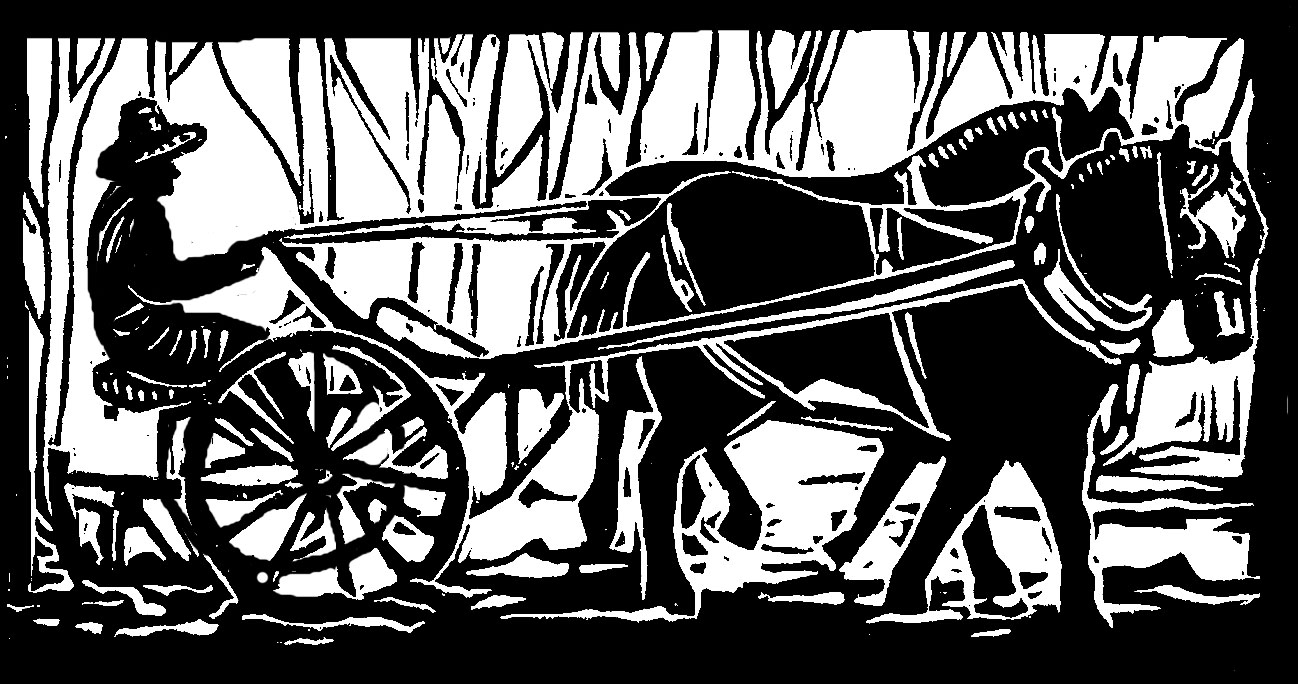
Run, Farmer, Run!


It has been a strange season here on the farm, as it has been strange for all of us, dealing with the pandemic. My fellow farmer and I have been feeling very grateful, for our house, and for good food, and for our work here on the farm, which leads to a naturally more limited social contact.

Still, we have had to make several changes for the season, mainly rethinking our produce distribution system, trying to find some sound balance between pandemic risk and produce benefit. After many deliberations, we settled  on a curbside (or, really, dirt road-side) pick-up. Rather than having CSA members pack their own shares from the harvest crates in the shed, we would pack all the produce, and have the shares ready for pick-up, placing them into the cars ourselves.

Luckily, we had ordered a stock of compostable bags ahead of time. The first week of harvest, we bagged each item, and then boxed the shares. Except, we discovered, we didn't have enough boxes to send the boxes themselves home with the fine people. Thus we packed a box, carried it to the car, then proceeded to unpack the box, repacking the produce in the members' own box in the car. This was crazy-making, to say the least. Plus we were using 600 brand-new bags per week, up from zero bags per week the year before.

We called around, asking our CSA farmer friends what they were doing, and we ended up investing in wooden bushel baskets. This simplified things enormously, and our bag use went down 75% immediately. Plus everyone loves the beautiful baskets, which showcase the produce.

We also decided not to have any you-pick crops, which meant that the three of us, two farmers and our college-age daughter, would be spending even more hours picking and dividing up the harvest.

Recently, in fact, in the bean patch, my daughter and I amused ourselves by figuring out that this time of year, and including the formerly you-pick crops, we are harvesting all or part of six days a week.
           
“Really funny, huh?” I said to my daughter.
           
“Oh, yeah,” she said, probably wondering why she had to be born to a couple of farmers, “Really funny.”
           
Some time later, after three hours in the raspberry patch, she groaned, “Why are there so many stupid raspberries? Die, raspberries! Die!” which struck us both as extremely funny. Then my farmer fellow came to join us in picking, shaking his head at our gales of laughter.
          
“I love picking berries,” he said, which made my daughter and I both groan, and lob mushy berries at him.
           
“What?” he said. “What?”
           
But the next day he was doing a little groaning himself, as we were hard-pressed to get all those berries and vegetables packed up in time for the members (despite having pushed our harvest open hours back from one until three, knowing it would take us much longer to pack everything ourselves).
           
On that day, we still had the millions of raspberries to sort and crate, along with regular harvesting and packing, and there was a point where my daughter would run repeatedly into the house, where I was frantically sorting and crating berries, saying, “There's another person here, there's another person here, there's another person here!” as my fellow made pleasant farm small talk, or pleasant small farm talk, with the waiting members.
           
Everyone was very nice about the short wait, and they may also have been amused by what was happening in the background: my daughter running frantically to the house, and then running back, followed a few minutes later by me running frantically from the house to the packing shed, with a crate of raspberries, and then running back again, to sort the next crate, while my daughter ran down the driveway with the completed share.
           
Luckily my fellow farmer didn't say, “I love making pleasant small farm talk,” but instead, at the end of the day, he said, “Wow, I hate not being ready on time. It's really stressful. We've got so much more to do with this new pandemic system.”
           
My daughter and I agreed heartily.  All I could think of was “Run, farmer run!” and I went to our bookshelf.
           
Maybe you know that phrase, and the picture book Hard Scrabble Harvest by Dahlov Ipcar.  Ipcar was born in Vermont, and lived in Maine as an adult, so she knows all about gardening in New England. Mostly the book is about keeping all the vegetable and fruit loving critters out of the garden, but the refrain I remember best is “Run, farmer, run!”

Ah yes, we are running, faster than ever.


Originally published in the Monadnock Shopper News, Aug 26 - Sept 1, 2020

Then Again . . . July on the Farm

Oh, July. Is it even possible to write about July on a vegetable farm in New Hampshire?

I could write about harvesting, which took a few hours on CSA harvest day in early June, and now takes four days of every week, shoehorned on top of all the other work. Peas and raspberries, broccoli and cabbage and beans, beets and cherry and paste and slicing tomatoes, kale and chard and lettuce and zucchini and yellow squash and cucumbers. In fact, a week or two ago, we spent 10 plus hours times three farmers (30 plus hours that would be, total) picking 104 quarts of raspberries. That's a lot of hours, and a lot of berries.

Then again, I could write how wonderful it is to have all these delicious berries and vegetables, and to have the garden producing well, and remind myself, that harvest is, after all, pretty much the point of all this farming.

Or I could write about weeds, how our garden was looking so grand in the dry days of June, because we could irrigate exactly where we wanted to, i.e. the vegetables, and very few weeds germinated.

Then again, I could write about how grateful we were for the recent rain, because the pastures for the draft horses were getting mighty short, and the hay crop was looking weak, and the pond was slowly sinking from all our irrigation. Even though weeds love rain, and our garden is now a big weedy mess, so do vegetables love rain, and they are big and bountiful.

I could write about woodchucks, who have risen to new heights this year, chomping at the garden from three different directions, harvesting happily away, evading our Havahart traps, baited with the most tasty of peanut butters, plum jams of our own making, and stale bread. I could write how we are frantically covering all the woodchuck delights, especially the brassicas, with row cover, and I could write about our great state of dismay when we found that at least one chuck is now chewing through the brand new row cover to get at the almost brand new kale, and completely ignoring our bait.

Then again, I could write how woodchucks are part of the marvelous diversity of our world, and how very much I want to affirm that there is food enough for all. (Of course, I think the chucks ought to be eating that nice grass and other wild vegetation we leave as borders, and not our crops, but hey, who am I to say?)

I could write about making hay, another kind of harvest, which is always pressing in July, and we've got all this bothersome garden work to do, which doesn't allow us to hay easily. I could grouse about the weather and the hay: too dry to grow hay, then too wet to make hay, now too hot to think about hay. (Would that "too hot" was a reasonable excuse for not making hay! Alas, it is not.)

Then again, I could write about the bobolinks in the hayfield, and the brown-eyed susans, and how lovely it feels when all the hay forces coalesce, and we are coming down the hill at nine o'clock with the last load of the day, the horses as eager as we are for a rest, and the fireflies and a big orange moon rising.

I could write about Clyde, our new horse, who is very steady with the machinery, in fact so steady that he is nearly asleep in the harness. We need to use a “tickler,” as our wise horse friends say, a long stick to scratch at the root of Clyde's tail to wake him up a little and join his teammate in the work. “Step up, Clyde,” we say, “Step up!” Also I might mention that Clyde is an excellent harvester himself, very eager to eat grass at every opportunity, whether that is grazing in the pasture, or more problematically, grazing as he is supposed to be cultivating pathways. (Plus he's happier to mow the hay with his teeth than with the sickle bar.)

Then again, I could write what a funny sweet horse Clyde is, with his good disposition and his droopy lip and his big head and his beautiful kind eye and lovely coloring, reddish-brown with black points, and how he has a gorgeous floating trot, and how we are looking forward to riding him (when this bothersome garden harvest settles down).

Or I could write about the farm kitchen, with its dishes so long dirty that the spiders and spider webs have moved in, or its fridge so bursting full that things fall out when you open the door. Oops, there comes that cabbage again! Bump, bump, bump!

Then again, I could write about all the delicious food that we're eating, so delicious that you wonder why we are so lucky, and that brings me right back to my starting point, which is, of course, harvesting. Which is, yes, July.


Originally published in the Monadnock Shopper News, July 29 - Aug 4, 2020

Clyde Comes Clopping


We were excited and nervous about bringing our new horse to our vegetable farm. Mostly we were nervous because the last time we brought horses home, we had our hands full.

Several years ago, we bought a team of Belgians, Molly and Moon, who were a good age, with sweet dispositions, good health, and good training. As a horse-owning friend said, “They've got no demons in 'em.” They were, and are, honest and kind. But, gee, they were not used to farm life.

Before farm life even commenced, there were the introductions to our resident horses. We read about how to introduce new horses, slowly, over fences and in stalls, and we divided our barnyard into two: one side for Molly and Moon, and one side for long-time residents and black Percherons Betsy and Ben.

There were lots of squeals and snorts during the afternoon, but things seemed to be working according to plan. We said good night, and went to bed. However, in the morning, we discovered the electric fence down, and the new horses trapped in the stalls by the resident horses. Whoops, we said. Happily, no one got hurt, and soon they were acting like they'd been on the farm together all their lives.

Except of course, when it came to farm machinery. Molly and Moon had never seen, heard, or pulled a manure/compost spreader, a disc, a harrow, a cultivator, a mower bar, a hayloader. None of it was to their liking, and we wondered if we were even going to be able to farm with these two horses.

That summer, we had more than one pasture break-out and more than one machinery runaway, including Molly and Moon hitched to a hayrake galloping down our little dirt road on to the main road, with my teamster-fellow running desperately behind. It was a hairy season, trying to get all the garden work done, the hay in, and acclimate two new horses to everything scary on the farm.

These days you would never know that Molly and Moon hadn't grown up here. But, as you may imagine, we awaited the new horse's arrival with some trepidation.

As soon as we haltered our resident horses, now Molly, Moon and Ben, they knew right away something was up: “Oh great! Finally, it's time to go out to pasture! This is what we've been waiting for!” But then we tied them to the barn, which was definitely not going to the pasture. And then they heard a noise.

Clop, clop, clop. All heads went way up in the air. All ears pricked forward.

There he was. The new horse. One horse called. The others vibrated at the end of their lead ropes. We all stood there breathless for a moment, absorbing the news.

Then we led Clyde into the stall area, blocked off from the paddock with heavy planks, and turned him free. One by one, we let the other horses loose to come over for introductions. Again, there were a lot of snuffs and snorts, some chomping and threats of kicking. But the planks held, and thus began the week of serious horse meetings, with every possible combination of horses in stalls and paddock.

Moon seemed to like Clyde. Molly was all right with Clyde. Ben did not like Clyde. No, no, he did not. Ben, teeth bared, would rush at Clyde, and Clyde would turn his heels to him, and Ben would rush away again, only to repeat it all.

We also worked Clyde with the other horses, as a kind of “chaperoned” event. It went great with Moon, as he is pretty much retired, and didn't need a chaperoned event. It went fine with Molly and Clyde, discing and harrowing the garden.

And then there was Ben, whose umbrage at the interloper was powerful. Ben was not at all interested in being harnessed with Clyde, or in working with him. He only wanted to threaten and kick and bite Clyde, which made it rather difficult to go ahead with the disc. Finally I walked beside Ben, chirping him along, and distracting him enough from Clyde that Ben could actually move forward, which he did, at last, and at quite a lively pace.

But the most wonderful thing was that Clyde was not a bit worried about the noise of the disc or harrow. He didn't think that much of Ben's behavior, but so far the machinery was all right with him. We breathed a big sigh of relief. Maybe this season would be a gentle clopping one, instead of a hairy break-out, run-away one.

Despite a few fireworks in the paddock too, mostly it was pretty peaceful, compared to the last time we brought in new horses. Finally, after a week, all four horses were loose together, and getting along, more or less.

That very night we had a big thunderstorm. What would the horses think of all that charge in the air? Well, they galloped around together in the paddock, led by Molly. In a bunch.

“Ahhh,” we breathed. They've done it. They've become a herd, a herd of four. Our new horse is really home.
 

Originally published in the Monadnock Shopper News, July 1-7, 2020

Vegetables? No, Horses!

You might think that vegetable farmers in New Hampshire would have only one thing on their minds this time of year: vegetables. But no! What we're thinking about instead is: horses!

We have a new horse on the place, which is exciting news for our little farm, for us farmers, and for our three draft horses: Belgians Molly and Moon, and black Percheron Ben, are 22, 23, and 18, respectively. Molly, our super-peppy horse, is beginning to be worn out after a long hot day of summer haying, and Moon has believed he should be in full retirement for some time now, and Ben, our baby, born right here on the farm, is no longer a spring chicken himself.

We started putting out new horse feelers a while ago, at the end of last season, calling the horse people we knew, checking out lists on the computer. My fellow thought of going to an auction in the spring, but I didn't like the idea much. Auctions are very stressful, I find, on the animals and on the bidders, and you're never quite sure if what you end up with is going to be quite the same as what you've bid on.

“I'm not going to jump at the first one I see,” my fellow reassured me.

“No?” I said.

“I mean, I know I'm a jumper, and all,” he went on.

“You sure are a jumper,” I laughed, and he proved his jumping mettle that very day by finding a fine team of Percherons on the Internet, eight and ten years old. He was ready to race off.

“But wait!” I said. “We only have three stalls, and then a fourth sort of stall! We have three horses already! We can't get a team! Think of all that hay we'll need!'”

“Oh, yeah,” he said.

“Let's keep looking,” I suggested. “We're not in a hurry. Couldn't we get along with our three again this season, if we planned it well? You know, had the garden sections ready right on time, so there's no desperate knee-high quack grass plowing in blazingly hot July, that kind of thing?”

“Well, yeah, I guess,” said my fellow, looking sadly at his team of Percherons disappearing from the computer screen.

Luckily, the vegetables began to loom ever larger in our minds, and the idea of a new horse settled down to a gentle simmer. I made a gentle simmer horse prayer: “Oh, horse that is ready to come to us, we are ready for you: we have nice company for you, good work, good grass, and we would love someone sound and kind and steady and a little younger to come to us.”

And then we got the call. It was from a family we knew and trusted. They had five horses, which was too many. They had a nice American Brabant/American Belgian cross that they might sell, to a good home. He was a little older than we planned, at 16, but he was very experienced on farm machinery. Did we want to come look at him?

Yes, we did. What fun to drive up to northern Vermont, after not going anywhere for weeks because of the virus. What fun to see the sheep and chickens and the five horses and two dogs and our old friend and her family! What fun to see Clyde, quiet and kind-eyed, harnessed up and spreading compost with his team mate!

“We're just trying to get a little work done, in case you want him,” our friend laughed.

It was the perfect introduction. Clyde was big, beautiful, calm, and steady. My fellow took a turn driving the team and spreader, while I talked to our friend. She told me horse stories, about how they had tried selling another horse, and he was mistreated, and they brought him back home. They wanted a good home for Clyde, and they would always take him back if it didn't work out. My fellow came back glowing from his drive, and I was glowing from my conversation. We asked all our horse-buying questions, from feed to farrier work, from stalls to stamina. Our friends ended with, “Just let us know. You can think about him.”

My fellow and I walked over to our car, talking, and for once we were both jumping at the same time. We walked back, check in hand. Suddenly our brains were more full of horses than vegetables!

Who was this new being? What would he like? What would he worry about? What would he think about our horses, and what would they think about him?

It took ten days to arrange a time to borrow a truck and trailer. Then our new horse came to his new home, and everybody jumped: the horses, the farmers, even the very vegetables! But nice gentle jumps they were, just the kind oldish farmers and oldish horses and newish vegetables appreciate this hopping and jumping time of year.

 Originally published in the Monadnock Shopper News, June 3-9, 2020