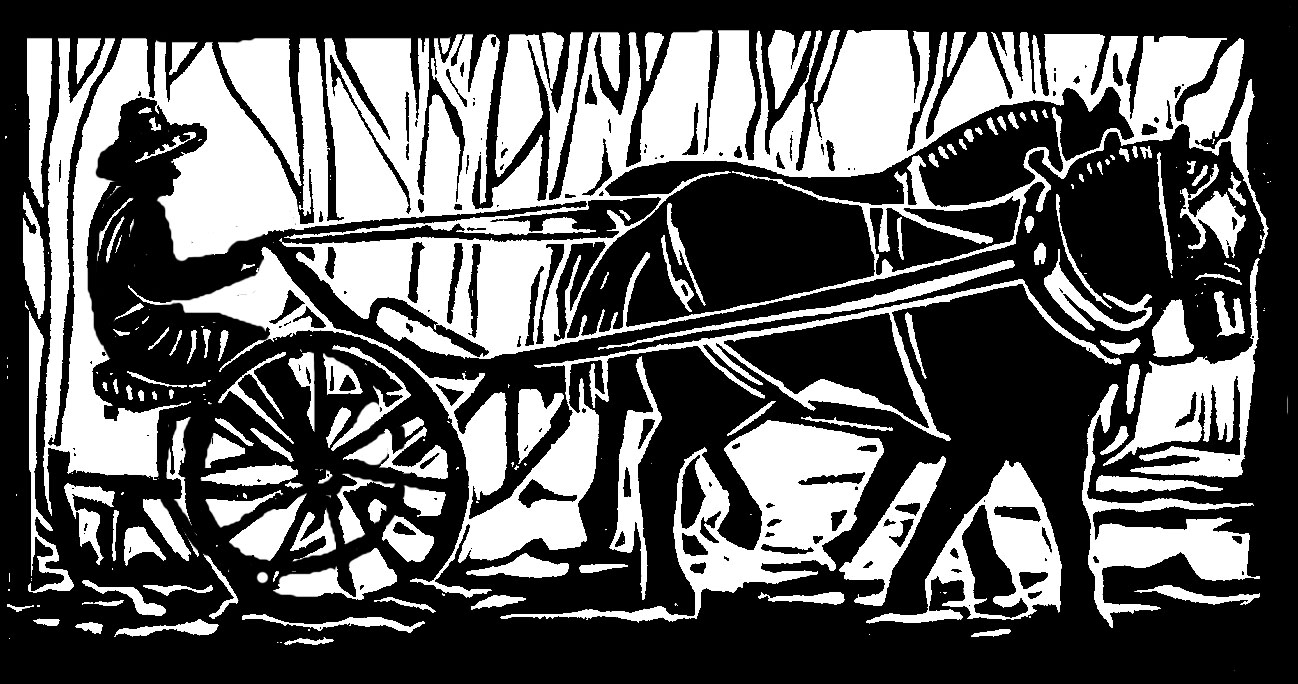
A few months ago, we had to bury our beloved apple-eater Molly, the last of our four retired horses. Molly was everybody's favorite, horse and human alike.
When Molly first came to our farm with her brother Moon, she was so worried about all the new sights and sounds that she could hardly cope. In fact, the first time my fellow hitched the team to the forecart for a drive, wild-eyed Molly galloped away with Moon at her side. My fellow slowed them down by steering into a tree. It was kind of hard on the harness, but effective.
Our draft horse mentors came to assess the team and suggested that calm Moon work with our experienced farm horse Ben. Then I led Molly ahead, behind, left, and right of the implements as they were operating, so that she could see what was making all the scary noises. It seemed to work, though the project wore me out a lot faster than it did Molly.
Molly was just the kind of horse my farmer fellow likes, a real worker, so peppy she seemed to be saying, “Can't we do this a little faster? Walking's all right, but trotting's better, and cantering's the best!” She was lots of fun to ride and to drive, but haying with Molly was another matter.
Molly never liked the first pass around the hayfield, because the hayloader would catch on the overhanging tree branches. Her natural hurry-up turned into even more hurry-up. Moon went right along with her. Since haying with horses is smoothest at a funeral pace, my fellow worked to slow everyone. Meanwhile I spent more time falling down than building the load on the lurching haywagon.
But it was hard to be mad at Molly. She was the lovey-doviest horse we've ever had, nickering at us, following us around the paddock, nudging us with her nose for scratches. “You've got two hands, why aren't you petting me with both of them?” said Molly. Molly was our most talkative horse, between nickers and squeals, which were reserved for any horse except Moon getting too close, either to her hay or to her person. We called it her Squeal-o-meter.
One of our smaller draft horses, Molly was short-coupled, strong and balanced, with the pleasing roundness of a pony, and the occasional naughtiness too. She was a top-notch wiggler out of fences, leading Moon and Ben astray many a time.
Molly was always 24 hours ahead of us. We'd just be saying, “Looks like we'd better change the horses' pasture tomorrow,” and that would be the night the neighbors would call about the horses on their lawn. Happily for us, Molly was perfectly willing to be rounded up again, even without the lure of a bucket of grain.
During Molly's last summer, when the new team, Willow and Fern, hadn't learned yet that following Molly led to greener pastures, Molly escaped by herself. She would call for the others, but they couldn't seem to figure out how she was making her break for the fly-free barn. Nor could we.
Morning after morning we heard her calling, then giving up and trotting into the barn by herself. We wanted a little more say in when horses came hot-footing down the lane, so we kept tightening up the gate. Finally we realized that clever Molly had found the never-used flimsy gate tucked in a corner.
Molly was the horse we introduced first to our CSA members and their children, especially if any of those people were nervous around horses. Molly was the one we'd pop a four year old on to have a ramble around the paddock. Molly was the one we counted on to get the work done, and counted on to cheer us up when we were discouraged about never getting the work done.
Aw, Molly. Come on back and and get through the fences. Come on back and work too fast. Come on back and eat apples. Come on back and we'll scratch you with both hands.
Originally published in the Monadnock Shopper News, July 22 - July 28, 2026